
Allied Mover Ships Only Right Hand Driven Vehicle?

Introduction People ask this more than you’d think. Someone’s relocating abroad, they’ve got their car, and suddenly the question hits – will the moving company even take it if the steering wheel’s on the “wrong” side? It’s not a silly question. It’s actually a pretty logical thing to wonder, especially if you’re moving between countries that treat driving completely differently. Allied Movers gets this one regularly, usually alongside the bigger concern: what’s the international car shipping cost Allied Movers is going to charge, and what’s actually included in that number. Both questions deserve real answers, not a runaround. So here’s the honest version. Do International Movers Ship Only Right-Hand Drive Vehicles? They don’t. That’s the short version. Right-hand drive, left-hand drive – the direction your steering wheel faces isn’t what a professional moving company uses to decide whether they’ll take your vehicle. What actually decides that is the destination country. Will they allow it in? Does it meet their import standards? That’s what matters. Allied Movers looks at the full picture. Steering position is just one small piece of it, and honestly, it rarely ends up being the sticking point. The real questions come down to local regulations – and once that conversation starts, it almost always leads to discussing the international car shipping cost Allied Movers quotes, because compliance requirements have a way of affecting the final number. Why Steering Position Matters in Some Countries It’s not that steering position is completely irrelevant. In certain countries, it genuinely does matter: Show up at customs with the wrong configuration and you’re looking at modification costs, compliance delays, or a flat-out rejection. None of those are situations you want to land in after you’ve already paid to ship the thing halfway across the world. Allied Movers pushes clients to check destination rules before anything else gets confirmed. As for pricing – steering position by itself rarely shifts the international car shipping cost Allied Movers calculates. But if modifications get triggered by local regulations, that’s a different story. Those costs are real and they add up. What Really Determines Vehicle Eligibility? Better questions to be asking upfront: These are what actually determine whether your car gets through – and they’re also among the biggest car shipping price factors people don’t think about until it’s too late. Getting across the key car shipping price factors early is how you avoid a budget that falls apart mid-process. Duties, taxes, mandatory inspections – all of that contributes to your vehicle relocation cost overseas. And that total looks pretty different depending on where you’re sending the car. Understanding International Car Shipping Costs So eligibility is sorted. Now the money question. The international car shipping cost Allied Movers puts together isn’t a single flat number – it’s made up of several components: Every client gets a full itemised breakdown. No vague estimates, no costs that appear out of nowhere after you’ve signed something. That transparency is the whole point. Worth saying clearly: the international car shipping cost Allied Movers charges doesn’t go up or down based on steering configuration. RHD, LHD – that’s not a pricing variable. What drives the cost are logistics, destination rules, and documentation. Those are the car shipping price factors that actually move the needle. Shipping Methods and Their Impact Two options, and they’re genuinely different: 1. Roll-on/Roll-off (RoRo) Your car gets driven onto the vessel, secured, and shipped. It’s the more straightforward and more affordable method – the international car shipping cost Allied Movers quotes for RoRo tends to come in lower than container shipping. The limitation is route availability – not every port supports it. 2. Container Shipping Vehicle goes into a container, sealed, protected. Better option for anything high-value or older. It does push the international car shipping cost Allied Movers quotes higher, but for certain vehicles the added protection is worth every bit of it. Allied Movers helps you figure out which one actually fits – based on your vehicle, your budget, and your timeline. Not a one-size pitch. How Regulations Affect Overseas Costs Clearing eligibility is one thing. What meets your car on the other end is another conversation entirely. Import duties, environmental levies, local registration fees – these all stack onto your vehicle relocation cost overseas in ways that genuinely catch people off guard. Some countries are aggressive about taxing older vehicles. Others require physical modifications before a foreign car can legally be driven on local roads – lighting adjustments, exhaust changes, fuel type compliance. That’s real money on top of your base shipping costs. And it’s money most people don’t budget for because no one told them to expect it. Working with Allied Movers means those costs get mapped out early, not after the vehicle’s already in port. That’s the difference between a final international car shipping cost Allied Movers delivers that matches your expectation and one that doesn’t. Breaking Down Car Shipping Price Factors Want to actually understand what shapes your quote? Here are the car shipping price factors that matter most: Each of these car shipping price factors feeds into the final number in its own way. Steering position barely registers as a variable – unless destination rules force modifications, in which case those modification costs are the real issue, not the wheel position itself. Knowing these car shipping price factors before you approach anyone for a quote changes the quality of conversations you can have – and makes it much harder to get handed a number that doesn’t hold up. Documentation Requirements This is where most delays actually come from. Not the shipping. The paperwork. Common documents required for international vehicle shipping: One missing document doesn’t just cause an inconvenience. It parks your car at the port, and port storage fees are not cheap. Left long enough, they quietly inflate your vehicle relocation cost overseas in a way that’s frustrating and completely avoidable. Allied Movers reviews documentation before confirming shipment. It’s exactly the kind of step that keeps the international car shipping
Restricted & Prohibited Vehicles for International Shipping
Introduction Most people don’t think twice about shipping their car when relocating abroad. It’s yours, you drive it, you’ll take it with you — simple enough. But plenty of people have arrived at a foreign port only to find their vehicle rejected, stuck in storage, and racking up daily fees. Not because they did anything wrong, but because they didn’t know the rules. Understanding which vehicles are prohibited for international shipping before you commit to anything isn’t just good practice — it can save you thousands of dollars and a serious headache. Why Restrictions Exist There’s no global standard for vehicle imports. Every country sets its own rules based on its own priorities — environmental targets, road safety frameworks, economic policy — and none of it was written with your specific car in mind. A vehicle that drives perfectly well and clears inspection at home can still be blocked at the border of your destination country. Vehicle import restrictions exist for real reasons, even when the logic feels frustrating from the outside. What makes this hard to navigate is that the rules don’t line up across borders. What clears customs in one country gets rejected in the next. Vehicle Types Most Commonly Blocked Vehicles That Fail Emission Standards Environmental compliance is a hard line in a growing number of countries. If your vehicle can’t meet the destination’s emission requirements, it doesn’t matter how well it runs or how recently it was serviced. Older diesel engines are the most commonly affected. Some countries don’t assess vehicles individually — they categorise older engine types as prohibited outright, and there’s no appeal process worth counting on. Vehicles That Exceed Age Limits Age-based restrictions catch a lot of people off guard. The destination country applies a blanket rule — vehicles manufactured before a certain year aren’t allowed — and your car doesn’t get assessed on its individual condition. Well-maintained doesn’t matter here. If the manufacture date falls outside the permitted window, the vehicle is blocked. No exceptions. Salvaged or Damaged Vehicles A salvage title creates problems in almost every international shipping scenario. Customs authorities treat total-loss history with suspicion regardless of how well the vehicle was repaired afterward. Most shipping companies won’t accept salvage vehicles for international transport precisely because port rejection is common. If your car carries a salvage or insurance write-off declaration, the odds of successfully importing it are low, and the process of trying is expensive. Heavily Modified Vehicles Car enthusiasts are often the most surprised by this one. Modifications that made sense at home — engine swaps, structural changes, non-factory braking or safety systems — can trigger import restrictions abroad. Countries with strict safety frameworks check whether a vehicle still conforms to its original certified specifications. If it doesn’t, it can be blocked regardless of whether the modifications were an improvement. If you’ve modified your vehicle significantly, get this checked before you make any shipping commitments. Wrong Driving Orientation Steering wheel placement can be the single detail that ends a shipping plan. Countries that strictly enforce driving orientation requirements — left-hand or right-hand drive — don’t make exceptions for otherwise compliant vehicles. Conversion, where it’s even available, typically costs enough to wipe out any financial benefit of shipping the car in the first place. This is a fixed rule in the countries that apply it. High-Value Vehicles in Sanctioned Regions Geopolitics reaches further into everyday life than most people expect. In regions subject to active trade sanctions, luxury and high-value vehicles can be prohibited regardless of their condition, age, or emissions status. The restriction is based on market value and political context, not the vehicle itself. These rules also shift as political situations evolve, which means a route that was open a year ago might be blocked today. Classic and Vintage Cars Classic vehicles sit in complicated territory. Some countries have genuine exemptions that make importing authentic vintage cars manageable. Others apply the same age restrictions they apply to everything else, and historical value doesn’t factor in. Where collectors consistently run into trouble is documentation — a genuine classic with incomplete or incorrectly formatted paperwork can be blocked the same way a non-compliant vehicle would be. If you’re shipping something of real financial or sentimental value, the documentation needs to be thorough and correctly organised before anything moves. Country-Specific Rules Matter More Than Regional Generalizations It’s tempting to think in regional terms — “Middle Eastern rules,” “European standards” — but this approach leads to problems. Rules in one Middle Eastern country are often meaningfully different from a neighbouring one. Japan and South Korea have different requirements. European Union directives apply broadly, but individual member states sometimes layer additional requirements on top. The only information you can actually act on is the specific requirement for your specific destination. Researching by region rather than by country is how people end up surprised at the port. Documentation Failures Are As Costly As Physical Non-Compliance Here’s a scenario that plays out more often than it should: the vehicle meets every physical requirement. Emissions pass. Age is within the limit. Steering configuration is correct. And it still gets turned away because of a documentation gap. Missing original title, an outstanding loan on the vehicle, incomplete customs declarations, absent emission certificates — any one of these is enough to trigger a rejection. From the customs perspective, a documentation failure and a physical failure lead to the same outcome. The vehicle doesn’t enter. Getting documentation reviewed against the specific requirements of your destination before anything is shipped is one of the most practical steps you can take. Problems identified early are problems you can fix without a storage bill building up in a foreign port. Temporary vs. Permanent Import: Not the Same Rules People on extended work assignments discover this distinction at the worst possible time. A vehicle can enter under temporary import allowances without issue, then create real problems when the attempt is made to convert that temporary status to permanent registration. The rules that
How to Prepare Your Car for International Shipping

Introduction When you decide to move your vehicle across borders, excitement and stress often go hand in hand. Whether you’re relocating for work, education, or a fresh start, your car is more than just metal and wheels—it’s part of your daily life. That’s why understanding car shipping insurance is absolutely essential before you hand over the keys. Many people assume nothing will go wrong during transport. While most shipments arrive safely, international logistics always carry some degree of risk. Weather conditions, port handling, customs inspections, and long transit routes can all create unexpected situations. This is where international car shipping insurance coverage plays a crucial role in protecting your investment. If you’re planning your move with Allied Movers Muscat, knowing exactly what’s included in your policy will help you avoid costly surprises and ensure complete peace of mind. Why Car Shipping Insurance Matters People have a tendency to picture international car shipping as something like handing your vehicle to a responsible adult who puts it carefully on a boat and delivers it neatly on the other side. And honestly, most of the time, that’s roughly what happens. But “most of the time” isn’t the same as “always.” Your car doesn’t travel with a single person who cares about it the way you do. It travels through a chain — collection driver, inland transport crew, terminal handlers, port workers, crane operators, customs inspectors, discharge crew, delivery driver. Each one is a different person, a different company, different standards, different levels of busy. Some of those handovers happen at ports processing thousands of vehicles simultaneously. A strap positioned slightly wrong during loading. A forklift that clips a bumper in a packed terminal. Rough seas that shift unsecured cargo. These things happen. Not constantly, not even frequently — but they happen, and when they happen to your car, you’re the one dealing with the consequences. Car shipping insurance is what determines whether those consequences cost you thousands or cost you nothing. Without solid international car shipping insurance coverage, every risk in that chain is yours to absorb. Companies like Allied Movers Muscat have seen how these situations play out when people are properly covered and when they’re not — and the difference is significant enough that the right company will always make sure you understand your vehicle transit insurance options before you commit. What Does International Car Shipping Insurance Typically Cover? The frustrating honest answer is: it depends on what you actually bought, not what you assumed you were getting. Most decent international car shipping insurance coverage plans include the following protections — but read your specific policy wording before assuming any of them apply to you: 1. Physical Damage During Transit This is the core of any shipping insurance for cars policy. It covers: Think about what “loading” actually involves at a busy international port. Heavy machinery, tight spaces, workers moving quickly. If something goes wrong during that process and you have proper vehicle transit insurance in place, it’s a claim. If you don’t, it’s an invoice addressed to you personally. 2. Theft Protection Opportunistic theft does occur at international ports — particularly for high-value vehicles sitting in holding areas for days at a time. Comprehensive car shipping insurance typically covers total loss due to theft, but it’s not always included automatically. If you’re shipping anything expensive through Allied Movers Muscat, specifically ask whether theft is written into your international car shipping insurance coverage as a named protection. Get that confirmed clearly, not just implied by someone who wants to close the booking. 3. Natural Disasters Vessels hit weather. Routes through certain oceans during certain seasons can get genuinely rough. Most shipping insurance for cars plans include natural disaster coverage for events that occur during transit — and this is one of those protections that sits quietly in the background until the day a vessel encounters something serious, at which point you’re very glad it’s there. Basic vehicle transit insurance sometimes strips this out to reduce the premium. Worth knowing which side of that line your policy sits on. 4. Fire and Explosion Port fires are documented events. Cargo vessel incidents happen. A properly structured international car shipping insurance coverage plan includes fire-related compensation — not as a vague assurance but as a specific clause you can locate and read. When you’re going through your policy before shipping with Allied Movers Muscat, find that clause. Point to it. If nobody can show you where it says fire is covered in your car shipping insurance document, that’s information worth having before you leave. What Is Usually Not Covered? Pay attention here, because this is where claims fall apart. The exclusions in a car shipping insurance policy aren’t buried in invisible ink. They’re listed clearly. People just tend not to read them until they’re trying to make a claim, at which point the reading is a lot less comfortable. Common exclusions include: Each of these has featured in a disputed claim somewhere. The pre-existing damage one catches people most often, which is why the inspection report done before your car leaves matters so much. When you ship through Allied Movers Muscat, don’t let the pre-shipment inspection be a quick ten-minute formality. Treat it seriously. Photograph every panel, every angle, every existing scratch however minor. Make sure the report matches what you’ve photographed. Make sure it’s signed by both parties and that you leave with a copy. That document is your entire foundation if you need to activate your international car shipping insurance coverage at the other end. Types of Vehicle Transit Insurance Vehicle transit insurance comes in different shapes, and the gap between the cheapest and the most comprehensive isn’t just about price — it’s about what actually happens when something goes wrong. 1. Total Loss Coverage The entry-level version of car shipping insurance. Pays out only if the vehicle is completely destroyed or unrecoverable. A crease, a dent, a deep scratch — none of that qualifies, regardless of the repair cost. This
Can You Ship a Used or Modified Car Internationally?

Introduction Late night Google searches, half a dozen browser tabs open, and still not a straight answer — sound familiar? If you’ve been trying to figure out whether can you ship a used or modified car internationally is even possible, let me save you the rabbit hole. Yes, it is. But like most things involving international logistics, the devil is firmly in the details. I’ve seen people ship beautifully stock sedans overseas without a single hiccup. I’ve also seen heavily modified vehicles sit in customs for weeks because the owner assumed the rules were the same everywhere. They’re not. So before you arrange anything, let’s talk through what actually happens when you try to ship used car internationally — and what changes when your car isn’t exactly factory standard. Can You Ship a Used Car Internationally? Straightforward answer: yes. You can ship used car internationally, and it happens constantly. Relocation, private sales, family transfers — vehicles cross borders every single day for all kinds of reasons. What catches people off guard is the compliance side of things. A used vehicle isn’t just cargo. It’s a regulated item that has to meet the standards of wherever it’s landing, not just where it’s leaving from. Before you ship used car internationally, these are the things that genuinely matter: The tricky part is that used car export rules aren’t the same across the board. Some countries have a hard cutoff on vehicle age — if your car is too old, it simply won’t be allowed in. Others require an emissions test done locally before the car clears the port. Working with someone like Allied Movers who already knows these country-specific rules is genuinely worth it, because finding out at the border that your documentation is wrong is a situation nobody wants to be in. Can I Ship a Modified Car Overseas? Yes — and this is the question I hear from enthusiasts probably more than any other. Can I ship a modified car overseas? You can. But if you’re expecting the process to be as smooth as shipping a stock vehicle, you need to reset that expectation now. When people ask can I ship a modified car overseas, they’re usually talking about cars that have seen real work done to them: Here’s the reality. Those modifications might be perfectly legal where you live. But the country you’re shipping to has its own rulebook, and your car has to satisfy that rulebook — not yours. Modified vehicles sit under a different category of scrutiny when it comes to vehicle modification shipping guidelines, and that scrutiny is legitimate. A vehicle that’s had structural work done genuinely needs to be assessed differently than one that rolled off a production line untouched. Understanding Used Car Export Rules Before you do anything else — before you even get quotes — understand the used car export rules that apply to your specific situation. Both ends of the journey matter here, not just the destination. Here’s the core documentation that comes up almost universally when you ship used car internationally: 1. Proof of Ownership A clean title with your name on it. No outstanding finance, no ownership disputes. This one sounds obvious but people still get tripped up by it. 2. Export Clearance A lot of countries require formal government sign-off before a vehicle can leave. This isn’t something that happens automatically — you have to apply for it. 3. Bill of Lading Your official shipping document. It follows the vehicle through every stage of the journey and is your primary proof that the shipment is legitimate. 4. Import Approval Some destination countries want pre-approval before you even arrange to ship used car internationally to them. Skip this step and you could be looking at the car sitting in a holding facility while the paperwork catches up. Failing to get across used car export rules doesn’t just cause inconvenience. We’re talking about vehicles being held indefinitely, fines landing in your lap, or in serious cases, the car being confiscated. Allied Movers handles this documentation as part of the process, which is precisely the kind of thing that makes a professional service worth the cost. Vehicle Modification Shipping: What You Need to Know Still working through the question can I ship a modified car overseas? The answer keeps coming back to one thing: compliance. Not your home country’s compliance — the destination country’s compliance. Where Vehicle Modification Shipping Gets Complicated In vehicle modification shipping, customs aren’t just glancing at your car and waving it through. They may request: This is worth repeating — none of this is arbitrary bureaucracy designed to make your life miserable. These checks exist because modified vehicles can genuinely pose safety or environmental risks if they’re outside the limits set for road use. You can still ship used car internationally with a modified car. You just need to arrive with your paperwork in better shape than most people do. Inspection Requirements Before Shipping Every vehicle going through an international shipping process gets inspected before it leaves. This is standard practice, and when you ship used car internationally you should actually welcome it — it protects you as much as anyone else. A standard pre-shipment inspection covers: For modified cars, the process under vehicle modification shipping protocols is more involved. Inspectors aren’t just checking cosmetic condition — they’re looking at whether structural modifications affect the vehicle’s safety profile. And here’s the part that needs to be said plainly: if someone’s asking can I ship a modified car overseas while quietly hoping to slip undeclared modifications past customs, that strategy almost never works. What it usually produces is a rejected shipment, extra costs, and a delay that could have been completely avoided by being upfront from the beginning. Shipping Methods for Used or Modified Cars When you actually ship used car internationally, you’re choosing between two primary methods and the right one depends on your vehicle: 1. Roll-on/Roll-off (RoRo) Your car gets driven onto the vessel, secured, and
How Long Does International Car Shipping Take?

Introduction Here’s something that happens to almost everyone shipping a car internationally. You’ve been planning your move for months. You’ve sorted the accommodation, dealt with the visa paperwork, figured out where the kids are going to school, had approximately forty conversations about what furniture you’re keeping and what you’re selling. And somewhere in all of that, the car just… didn’t get properly thought about. Not because you forgot. More because it felt like something you could figure out closer to the time. And then closer to the time arrives and you’re suddenly trying to work out how long does it take to ship a car overseas while simultaneously doing seventeen other urgent things, and the answers you’re finding online are all over the place — some say four weeks, some say three months, none of them explain why there’s such a massive gap between those numbers. I’ve been around this industry long enough to have watched shipments go beautifully and watched them turn into complete nightmares. The difference, almost every single time, wasn’t bad luck. It was planning. Specifically, people planning around a international car shipping time estimate they found somewhere without understanding what actually sits inside that number. So let me just walk through it properly. Understanding International Car Shipping Time Real talk — international car shipping time can genuinely run anywhere from about two weeks to three months. That’s not a hedge or a disclaimer. Both ends of that range happen in real life. When people ask how long does it take to ship a car overseas, their brain goes straight to the boat. The ocean crossing. And look, that’s the biggest single chunk of the timeline — I’m not going to pretend otherwise. But it’s surrounded by stages that don’t get talked about enough. Getting documentation sorted. Moving the vehicle to the departure port. Port processing before it gets loaded. And then on the other side — customs clearance before you can actually take possession of it. Every single one of those stages takes time. Every single one of them can take more time than expected if something goes sideways. Rough regional estimates to give you something to anchor to: Your actual vehicle shipping timeline could sit anywhere within those ranges or slightly outside them depending on the specifics of your situation. Which ports are involved. Which vessel. What customs looks like at your destination right now. These things shift the number more than people realise. This is part of why it matters to work with someone who’s actively running shipments on your specific route rather than just quoting you an average from a chart. Allied Movers Oman does this day in and day out on these lanes — their estimates come from what’s actually happening at these ports right now, not historical data that may be months out of date. Key Factors That Affect International Car Shipping Time These are the things that actually determine where your international car shipping time lands. Not theory. Real stuff that I’ve seen push shipments in both directions. 1. Distance and Destination Further away, longer car relocation delivery time — that’s the obvious part. The less obvious part is that route structure matters just as much as raw distance. Direct sailing: one vessel, your departure port straight through to your destination. Simple, faster, fewer things that can go wrong. Transshipment: your car gets offloaded at an intermediate port somewhere and transferred to a different vessel to complete the journey. Adds time. Adds another point where something can go wrong — a missed connection, congestion at the transfer hub, your container getting caught in a backlog at the handover point. When you’re trying to nail down how long does it take to ship a car overseas to your specific destination, it’s worth asking upfront whether the route is direct or involves a transshipment. One conversation, and suddenly your international car shipping time estimate becomes a lot more accurate. 2. Shipping Method Two options and they genuinely make a difference to your vehicle shipping timeline: RoRo — Roll-on/Roll-off: The car gets driven onto the vessel, sails to the destination, gets driven off. That’s essentially it. Faster process, generally cheaper, works well for standard vehicles. If your car is normal and you want it there without unnecessary extra days, this is usually the right choice. Container shipping: Car goes into a sealed steel box, either on its own or alongside other cargo. Better protection — genuinely relevant if you’ve got something valuable or classic, or if you want to pack personal belongings inside alongside the vehicle. But getting cargo consolidated into containers takes time, and that time is real time that adds to your international car shipping time in a way the RoRo process doesn’t. Honestly for most people with normal cars — RoRo. It’s faster and there’s no meaningful downside for a standard vehicle. 3. Port Schedules and Transit Routes This is the one that blindsides people most often and I think it’s because it sounds like background logistics until the moment it directly affects your timeline. Vessels run on fixed schedules. They genuinely don’t wait. Miss the departure window — by any amount, even a single day — and you’re waiting for the next sailing on that route. Sometimes that’s a week away. On some routes it’s two weeks. On a few it’s even longer than that. And that gap just sits there adding to your international car shipping time while you can’t do a thing about it. Allied Movers Oman is careful about booking timing specifically because of this. Missing a sailing isn’t unavoidable bad luck — it’s what happens when the details aren’t being managed properly. Getting your vehicle onto the right vessel at the right moment is one of the most practical things a good logistics provider does to protect your vehicle shipping timeline from slipping for a completely preventable reason. 4. Customs Clearance If I had to pick the single stage that causes the most surprise
Shipping a Car by Sea vs Air: Pros, Cons & Cost Comparison

Introduction Alright, let’s cut straight to it — shipping a car overseas is one of those things that sounds manageable until you’re actually in it. Then the tabs multiply, the quotes roll in, and suddenly you’re forty minutes deep into a forum thread from 2019 wondering if any of it still applies. At some point, every person going through this lands on the same two options: ship car by sea, or go with air freight car shipping. I’ve talked to people who’ve done both, read through more shipping forums than I care to admit, and this sea vs air car shipping comparison is my attempt to lay it all out in a way that’s actually useful — not just a table with checkmarks. If you want someone to handle this professionally rather than DIY it, Allied Mover comes up consistently in international vehicle transport circles. They know the process well and are worth a call when you’re ready. Your Reason for Shipping Changes Everything Seriously — don’t skip past this part. The “right” shipping method for a guy who sold a rare motorcycle to a collector in Germany looks nothing like the right method for a family relocating to New Zealand with a minivan they’ve had for twelve years. People ship cars internationally for wildly different reasons. Some are moving abroad permanently and simply refuse to leave the car behind — understandable. Others are importing something they can’t find at home. Some are completing international sales. Some are just trying to get a car to a family member who moved far away. Every one of those situations comes with different urgency, different budgets, and a different tolerance for risk during transit. That’s what actually drives the choice between ship car by sea and air freight car shipping — not a bullet point comparison on a website. What Are These Two Methods, Really? Sea shipping loads your car onto an ocean freight vessel. Either it goes inside a sealed steel container, or it gets driven onto a roll-on/roll-off ship and parked on the deck alongside a bunch of other vehicles. Air freight car shipping puts your car into a cargo hold on a plane and flies it to the destination. Both work. That’s not in question. What’s in question is which one works for you — and that’s where it gets interesting. 1. The Cost Reality — No Sugarcoating Ship Car by Sea — The Number That Doesn’t Shock You When you ship car by sea, you’re essentially going in on a massive vessel with dozens of other vehicle owners. The cost gets spread across all of them, and that brings individual prices down to something most people can genuinely work with. Cheaper by 70 to 80 percent compared to air in many cases — and I want to sit with that number for a second, because it’s not a minor discount. That’s a completely different price bracket. For a regular car — the family SUV, the sedan you bought three years ago, the pickup you can’t imagine replacing — sea freight is just the practical choice. Add port fees and insurance and it’s still workable. That matters. Air Freight Car Shipping — The Quote That Hits Different There’s a specific feeling you get when you first see an air freight car shipping quote. A little disbelief, then a second look, then acceptance. Cargo planes move far fewer vehicles than ships, the fuel costs are enormous, and capacity is tight year-round. Five to ten times the price of sea freight is a normal range — and certain routes run higher than that. Here’s the thing though — there are real situations where that number makes sense. A collector car that absolutely cannot sustain weeks of ocean exposure. A relocation timeline so compressed that waiting is genuinely not an option. A destination where sea routes are impractical. In those specific cases, air freight car shipping earns what it charges. For most people with a regular car and a reasonable timeline? That price is a wall most people walk away from. 2. Time — The Conversation Nobody Wants to Have Sea Shipping — You’re Playing the Long Game Let’s be straight about this: when you ship car by sea, you are committing to a wait. The honest range is two to eight weeks depending on the route, and that upper end gets pushed further when weather or port delays enter the picture. If you need the car next week, this isn’t your method. But — and this is important — most people who end up frustrated with sea shipping timelines are people who treated it like an afterthought. International moves take months to organize. People who book sea freight early and fold it into their overall timeline almost never complain about it. It’s the ones who needed it done fast and chose the slow option anyway who end up stressed. Plan for it and it works. Don’t, and it becomes the thing that ruins your week. Air Freight — Days, Genuinely This is where air freight car shipping is just flatly better than everything else. Days from pickup to landing. Not weeks — days. If you’re in a situation with a hard deadline, a buyer who’s already been patient, or a relocation window that simply doesn’t allow for a long wait — air freight might genuinely be the best way to ship a car overseas for what you’re dealing with. Factor in customs clearance and airport handling time. Still fast. Still dramatically faster than anything on water. 3. Your Car’s Safety During Transit Sea Freight — Which Version Matters a Lot When you ship car by sea, protection isn’t uniform — it depends entirely on which shipping method you actually book. Container shipping locks the car inside a sealed steel box. It doesn’t shift during transit. It’s not exposed to saltwater spray or open-deck weather. Nobody touches it between origin and destination port. For anything with real value — financial or emotional
Is It Cheaper to Ship or Sell Your Car Before Moving Abroad?

Introduction Here’s something nobody tells you when you decide to move abroad: at some point, usually around 2am when you’re three tabs deep into international freight websites, you’re going to have a minor crisis about your car. Not your apartment. Not your job. Your car. It sneaks up on you. You’ve been so focused on the big stuff — paperwork, flights, what to do with the sofa — and then suddenly this one question takes over: do I ship it or just sell it and deal with it later? And the more you look into it, the messier it gets. That’s when car relocation becomes a serious part of the conversation — not just a logistics task, but a financial and emotional decision that can impact your entire move. This guide is the version of this conversation nobody bothered to have with you yet. Real numbers, real trade-offs, and an honest look at both sides — so you can stop spiralling and actually make a call. Understanding the Core Question: Ship or Sell Car? When people talk about whether to ship or sell car, it usually comes down to two options that both have genuine merit depending on your situation: The honest answer to should I ship my car or sell it before moving is that there isn’t one answer that works for everyone. Your destination matters. Your car’s current value matters. What import duties look like where you’re going matters. What cars actually cost over there matters. Allied Movers International works through this with people constantly and will tell you the same — it’s calculable, but you have to run your specific numbers, not someone else’s. Option 1: Shipping Your Car Abroad There’s a reason people ship their cars. You land somewhere completely unfamiliar, jet-lagged and slightly overwhelmed, and eventually you collect your own vehicle from the port — and something about sliding into a familiar driver’s seat in the middle of all that newness genuinely helps. People don’t talk about that part enough. But it costs money. Sometimes quite a lot of it. Costs Involved Any honest car relocation cost comparison has to start with the full picture, not just the headline freight charge. Shipping costs typically fall between $1,000 and $5,000 or more depending on your route and method — container shipping vs. roll-on/roll-off — and that’s before you add: The number grows faster than people expect. Getting a detailed quote upfront from Allied Movers International is how you avoid discovering three surprise charges after you’ve already committed to shipping. Pros of Shipping Your Car Cons of Shipping This is exactly why a proper car relocation cost comparison matters before you land on either side of the ship or sell car debate. Option 2: Selling Your Car Before Relocation Selling car before relocation rarely gets the enthusiastic write-up it probably deserves. It’s not dramatic. There’s no satisfying image of your car being loaded onto a container ship. But for a lot of people, it’s just the cleaner, smarter, lower-stress option — and it puts money in your account during one of the more expensive transitions you’ll go through. Financial Benefits Moving abroad costs more than you budget for. It always does. Security deposits, buying things twice because you couldn’t ship them, the general financial chaos of getting established somewhere new — having cash from selling car before relocation lands at exactly the right moment. People typically end up on the selling side when: Pros of Selling Cons of Selling Worth having a proper conversation about your specific situation — Allied Movers International has been through this with enough people to give you a straight answer rather than a generic one. The Things That Actually Decide This 1. What Your Destination Country Actually Allows Some countries are fairly reasonable about vehicle imports. Others levy import duties so steep they make the whole conversation irrelevant. Some have age restrictions on environmental grounds that would block your car regardless of cost. This needs to be step one — not something you look into after you’ve already decided what you want to do. A real car relocation cost comparison has to account for what’s actually legally and financially possible at your destination. 2. Three Numbers You Need to Get Right Now Your car’s realistic resale value. The full cost to ship and clear customs. What a comparable car actually costs to buy abroad. When you have real figures — not estimates, not forum speculation — the answer to should I ship my car or sell it before moving usually becomes pretty obvious. Most people haven’t gathered all three numbers yet when they feel stuck on this, and that’s the actual problem. 3. How Old the Car Is Older vehicles face tougher scrutiny. Emissions compliance requirements have tightened significantly across a lot of markets. If the car is getting on in years and isn’t high in value, the ship or sell car question often resolves itself on the selling side before you even finish the calculation. 4. Whether You’re Going for Two Years or Forever A temporary posting and a permanent move are completely different situations that happen to sound similar. Short-term relocations almost never justify shipping. Long-term moves completely change the maths. 5. What the Car Means to You Beyond Its Market Value This sounds like the kind of thing a proper financial guide would tell you to ignore. It isn’t. If a car has genuine personal significance — it was your first big purchase, it belonged to someone you loved, it represents something real in your life — that’s a legitimate factor. Just be clear-eyed about what honouring that is actually costing you. A Car Relocation Cost Comparison With Real Numbers Two scenarios. Both based on realistic figures. When shipping wins: You keep a $12,000 car for $3,500 instead of spending $18,000 to replace it. Clear decision. When selling wins: Sell for $6,000, buy abroad for $7,500. You’re $1,500 down on the car, but $2,500 ahead versus what shipping
Common Mistakes to Avoid When Shipping a Car Overseas

Introduction Right so — shipping a car overseas. Sounds simple enough until you’re actually doing it and realizing there’s about fifteen things happening at once that nobody warned you about. A form you’ve never seen before, a country-specific rule that applies only to your destination, a cost that somehow wasn’t in the original quote. It catches people off guard every single time. And the worst part? It’s mostly the same stuff going wrong repeatedly. Not freak accidents. Not bad luck. Just the same shipping car mistakes that keep tripping people up because nobody sat them down beforehand and said — here, look at this list first. So that’s what this is. Companies like Allied Movers Muscat deal with this daily and they’ll tell you straight — customers who come in prepared have a completely different experience from those who don’t. These are the real mistakes when shipping a car internationally that are worth knowing before anything else. 1. Not Researching Import Regulations You’d be surprised how many people get here — car booked, payment made, paperwork started — and then find out the destination country won’t accept their vehicle. Not because anything is wrong with the car necessarily, but because there’s an emissions rule, an age restriction, a required modification that nobody flagged early enough. Every country runs its own import rules and they don’t care what’s road-legal where you’re coming from. The international car shipping problems that come from finding this out too late are genuinely rough — storage fees piling up at the port, re-export requirements, fines while you figure out your next move. These shipping car mistakes hurt both the wallet and the schedule badly. Look up import eligibility, customs duties, required inspections and emission standards for your specific destination before you do anything else. Dull research, yes. But it’s the kind of thing that directly cuts vehicle relocation risks before the process has even properly started. 2. Incomplete or Incorrect Documentation Customs doesn’t do sympathy. One detail mismatched across documents, one form not completed correctly, something missing from the pile — shipment stops. Full stop. And you’re fixing it remotely, which is its own special kind of stressful. What makes this particularly frustrating is that most mistakes when shipping a car internationally in this area come from people genuinely not knowing what was required — not from carelessness. Title, bill of sale, passport copy, shipping invoice, customs declarations — that’s the starting set, and depending on destination there’s often more. Having Allied Movers Muscat handle this part is genuinely useful. They’ve run enough routes to know what each destination needs and they’re not going to let a documentation gap create international car shipping problems that hold everything up. Clean paperwork from the start quietly eliminates a lot of vehicle relocation risks that people don’t even realize they’re carrying. 3. Choosing the Cheapest Shipping Option Low quote looks good. Then the car shows up late, or damaged, or the final invoice is somehow higher than what was originally agreed. Budget providers in this industry compete on price by quietly trimming things — insurance coverage, container protection, any real accountability when something actually goes wrong. These aren’t hypothetical shipping car mistakes. They play out all the time with people who chose the cheapest option without asking what was actually included in it. Check credentials. Read reviews that aren’t on the company’s own website. Ask directly what happens if something goes wrong and how claims are handled. The mistakes when shipping a car internationally that end up costing the most almost always trace back to this one decision. Allied Movers Muscat isn’t always going to be the lowest number on paper but the international car shipping problems that follow cheap providers are not a trade worth making. 4. Ignoring Insurance Coverage Most people assume their car is fully covered during shipping. Often it’s covered partially — with limits that make the policy basically useless in any serious claim situation. Nobody reads the fine print until they’re trying to file a claim and discovering what’s actually in there. Not checking coverage limits, not getting additional protection on a car worth real money — these are shipping car mistakes that feel theoretical right until they’re not. The international car shipping problems involving uninsured or underinsured damage are expensive to deal with and genuinely avoidable. Get written confirmation of what’s covered before the car moves. What’s included, what’s excluded, what the actual claims process looks like. Don’t work on assumptions with this one. 5. Leaving Personal Items Inside the Vehicle Seems fine. A bag in the boot, some things in the glovebox, a jacket on the back seat. The issue is most shipping companies don’t allow personal items in the vehicle, a lot of destination customs regulations specifically prohibit it, and loose items moving around during transit can cause interior damage you’ll be annoyed about later. One of those shipping car mistakes people dismiss as minor until a shipment gets flagged or belongings get pulled at customs. Easiest fix on this whole list — empty the car completely before handing it over. Genuinely that’s it. 6. Not Preparing the Vehicle Properly Everyone gets so deep into the paperwork side that the actual physical preparation of the car becomes an afterthought. Which is fine until there’s a damage dispute at delivery and you’ve got nothing showing what the car looked like before it shipped. Wash it. Photograph every panel properly — existing scratches, marks, dents, all of it, from multiple angles and close up. Check fluids. Keep fuel below a quarter tank. Disable any alarms. Not complicated steps but skipping them is a proper shipping car mistake that creates real problems when you need to challenge something later. Most mistakes when shipping a car internationally that turn into drawn-out disputes exist because there was no documented baseline. Allied Movers Muscat handles the logistics — pre-shipment prep is yours to do, and doing it properly is one of the more practical ways to
Customs Clearance for Vehicles: Documents You Need Before Shipping
Introduction Shipping a car across international borders isn’t just about loading it into a container and sending it off. The real work often happens before your vehicle even leaves the port. If you don’t have the right car shipping documents, your vehicle could be delayed, fined, or even turned away at its destination — and trust me, that’s not a situation you want to be in. Whether you’re relocating for work, moving back home, or selling a vehicle overseas, getting a solid handle on the documents required to ship a car internationally is something you simply can’t skip. In this guide, we’ll walk you through everything you need to know about customs clearance for cars, the most important vehicle export paperwork, and how trusted companies like Allied Movers Oman help take the stress out of the whole process. Why Proper Documentation Matters in Car Shipping Here’s the thing — international shipping involves strict customs regulations, and every country plays by its own rules when it comes to import duties and inspection requirements. Without the correct car shipping documents in hand, customs authorities won’t think twice about holding your vehicle at the port. Getting your customs clearance for cars right ensures: This is why understanding the documents required to ship a car internationally isn’t just helpful — it’s absolutely non-negotiable. Essential Car Shipping Documents You Must Prepare Let’s break down the key car shipping documents you’ll need for a successful shipment. 1. Original Vehicle Title The vehicle title is your proof of ownership, plain and simple. Customs officials require it as part of the vehicle export paperwork to confirm that the car isn’t stolen or caught up in some financial dispute. If there’s an outstanding loan on the vehicle, you’ll likely need a lienholder authorization letter too. Without this among your documents required to ship a car internationally, the export process can come to a grinding halt. 2. Vehicle Registration Certificate Your vehicle registration confirms that the car is legally registered in your name — another piece of the puzzle for customs clearance for cars. Some countries actually require deregistration before export, so it’s worth checking the destination country’s rules ahead of time. A missing registration document can throw your whole timeline off. 3. Copy of Passport A valid passport copy is pretty much a universal requirement across all car shipping documents. Customs authorities on both ends need to verify your identity, and there’s no getting around it. If you’re working with a shipping partner like Allied Movers Oman, their team will let you know whether any additional visa documentation is needed based on your specific route. 4. Bill of Lading The Bill of Lading (BOL) is issued by the shipping company once your car is actually on board. Think of it as both a receipt and a transport contract rolled into one. This document is critical among the documents required to ship a car internationally because it lays out the key shipment details: Without it, customs clearance for cars at the destination port simply cannot move forward. 5. Commercial Invoice or Purchase Invoice If the car was recently purchased, customs may ask for a commercial invoice. This is what they use to determine the vehicle’s value for tax and duty calculations. Solid vehicle export paperwork here helps customs assess import duties accurately and keeps any valuation disputes from slowing things down. 6. Export Declaration Form Many countries require an official export declaration before a vehicle can leave. This form is essentially your confirmation that the vehicle is being exported legally and in line with trade regulations. Leaving this out of your car shipping documents can lead to shipment cancellation or some pretty steep penalties — neither of which you want to deal with. 7. Insurance Certificate While it’s not always a hard requirement for export, insurance coverage is something you really shouldn’t skip. It protects your car against loss or damage while it’s in transit. Professional companies like Allied Movers Oman can arrange marine insurance to make sure your vehicle is fully covered for the journey ahead. 8. Power of Attorney (If Applicable) If you’re letting a shipping company handle the paperwork on your behalf, you’ll likely need to provide a notarized power of attorney. This gives your logistics partner the legal authority to process customs clearance for cars and submit vehicle export paperwork in your name. Country-Specific Requirements One of the trickier aspects of preparing documents required to ship a car internationally is that every country has its own set of rules — and they don’t always line up. For instance: Working with experienced logistics providers like Allied Movers Oman means you’ll know about destination-specific requirements well before your shipment date, not after. Common Mistakes to Avoid in Vehicle Export Paperwork When pulling together your car shipping documents, even the smallest oversight can snowball into major delays. Watch out for these common slip-ups: Incomplete vehicle export paperwork can leave your car sitting at a port racking up storage fees — which adds up fast. That’s exactly why so many people hand off customs clearance for cars to professionals rather than going it alone. Import Documents Required at Destination The paperwork doesn’t wrap up once your car leaves home soil. At the destination port, you’ll typically need: These additional documents required to ship a car internationally are what allow the vehicle to be legally registered in its new country. Good coordination between your export and import documentation is what keeps customs clearance for cars running smoothly from start to finish. How Allied Movers Oman Simplifies the Process Wrangling all these car shipping documents can feel like a lot — especially if you’ve never shipped a vehicle internationally before. That’s where Allied Movers Oman genuinely makes a difference. Their team helps with: Having professionals in your corner means fewer surprises, fewer delays, and far less stress throughout the process. Tips for Smooth Customs Clearance for Cars A few practical pointers to keep things running without a hitch: ✔ Double-Check All
International Car Shipping Costs: What Affects the Final Price?
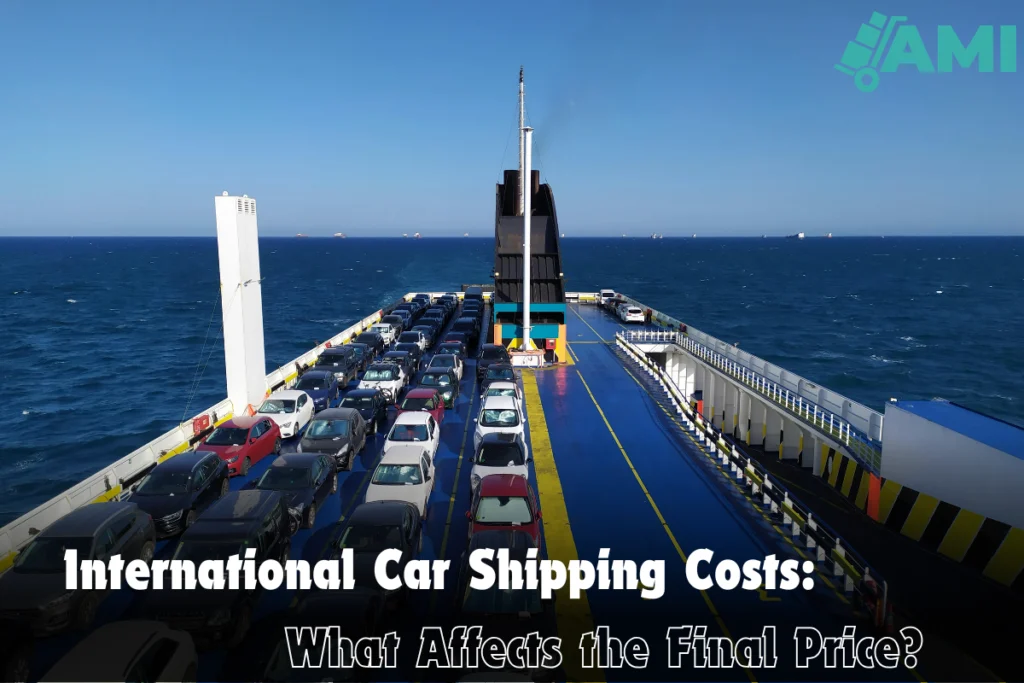
Introduction You’ve made the call to move abroad. Or maybe you came across a car listed overseas at a price that genuinely made you pause. At some point, no matter how you got here, the same question shows up: how much does it cost to ship a car internationally? On the surface it seems like something you could google and answer in five minutes. Then you actually try, and suddenly there’s a lot more to untangle than you expected. Getting a handle on the international car shipping cost before you’re deep into the process saves you real headaches. Not just for the budget — though that too — but because understanding what’s actually driving the price changes how you approach every decision that follows. You stop feeling like you’re at the mercy of whatever number lands in your inbox. Here’s what most people don’t realize going in: no two quotes are built the same way. Someone shipping a similar car to a different country, through a different company, two months later — their number could look completely different from yours. Distance, vehicle type, which shipping method you go with, customs at the destination, time of year — these things genuinely shape the final cost. They’re not fine print. Below, we go through the real car shipping price factors that move the needle, what they mean for your vehicle relocation cost overseas, and how working with somebody like Allied Movers tends to make the whole thing a lot less chaotic. Understanding International Car Shipping Cost Basics First things first — how much does it cost to ship a car internationally, ballpark? The range most people land in sits between $1,000 and $5,000, sometimes higher depending on what’s involved. That spread isn’t there to confuse you — it reflects the fact that the variables are real and they genuinely affect the number. Where you’re going, what you’re shipping, when you’re doing it, what the customs situation looks like on arrival — any one of these can shift a quote by several hundred dollars. When a company builds your international car shipping cost, they’re not running a simple distance calculation. There’s port handling, customs paperwork, inland transport, fuel surcharges, admin costs — all of it wrapped up in legally moving a vehicle from one country to another. Your vehicle relocation cost overseas is the product of all those layers, not just the nautical miles. Walking into the process with that awareness means you can actually interrogate a quote, not just stare at the total and hope for the best. 1. Distance and Destination Distance driving up cost — that part most people have already figured out before they start researching. More distance means more fuel, more time, more everything. The international car shipping cost goes up accordingly. No surprises there. What tends to genuinely surprise people is how much the destination country itself changes the equation. Two routes that cover roughly the same distance can produce quotes that look nothing alike. A destination with busy ports, high shipping volume, and well-worn trade lanes is one thing. A country with limited port infrastructure, tight import rules, or steep duty rates is an entirely different situation. These aren’t minor footnotes — they’re serious car shipping price factors that you simply won’t see reflected in a mileage-based estimate. Your vehicle relocation cost overseas is shaped as much by what’s waiting at the other end as by how far the ship travels. Allied Movers can walk you through destination-specific fees — port charges, import documentation requirements, country duties — so the number you get actually tells you what you’ll pay. 2. Shipping Method: Container vs. Roll-On/Roll-Off (RoRo) The method you choose for getting your car on the water has a direct and meaningful effect on your international car shipping cost. It’s worth understanding both options before you commit. Roll-On/Roll-Off (RoRo) RoRo is exactly what it sounds like — your car gets driven aboard a vessel built specifically for vehicles, secured in place, and shipped with others. It’s efficient, prep requirements are minimal, and it generally keeps the vehicle relocation cost overseas on the lower end of the spectrum. For most everyday cars, it works without issue. Container Shipping With container shipping, your vehicle travels inside a sealed steel container, either alone or alongside other cargo. The cost is higher — that’s just the reality. But for high-value vehicles, classics, or anything you’ve invested significant money into, the added protection justifies the increase in international car shipping cost for a lot of people. When you’re working out how much does it cost to ship a car internationally, don’t just go with the cheaper method by default. Think about what you’re shipping and ask for both options. The right call depends on the specific vehicle. 3. Vehicle Size, Weight, and Type Bigger vehicle, higher cost. It’s one of the more straightforward car shipping price factors, but it has real impact when it plays out across different vehicle types. A small car takes up less room, weighs less, and is easier to move through the logistics chain. A large SUV or full-size pickup is a different story in every one of those areas. Add modifications, unusual dimensions, or specialist handling requirements into the mix, and your international car shipping cost moves up further. When you’re asking for quotes, give accurate information. Actual dimensions. Correct weight. Any modifications the vehicle has. Quotes built on rough guesses tend to shift when it comes time to actually lock things in, and that’s a frustrating experience. Your vehicle relocation cost overseas should be based on what your car actually is. 4. Port-to-Port vs. Door-to-Door Service How much of the process you hand off to the shipping company — beyond the ocean freight itself — has a tangible effect on what you end up paying. It’s one of those car shipping price factors that’s easy to overlook when you’re focused on the freight cost. Port-to-Port puts more of the logistics in your hands. You