
Best Way to Move Large Furniture Safely
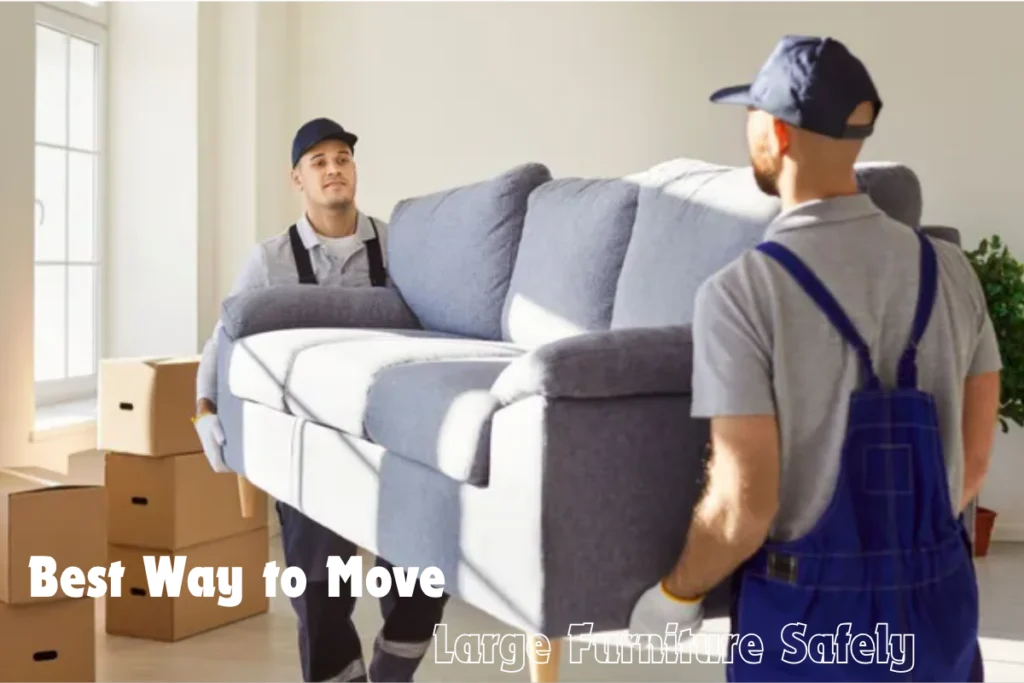
Introduction So here’s a story I don’t tell often because it’s genuinely embarrassing. First time I helped a friend move, we knocked a ceiling fan right off its mount, dragged a sofa leg across a freshly painted wall and left a scratch that looked like a lightning bolt, and then spent nearly an hour with that same sofa completely jammed in a doorway while four adults stood around arguing about physics. Not one of us had any real idea about how to move heavy furniture, and every single moment of that day proved it. Someone’s back gave out around hour three. Two people stopped speaking by hour four. I drove home in silence wondering how something that sounded so simple on a Friday night became such a disaster by Saturday afternoon. What that day taught me had nothing to do with strength. It had everything to do with the fact that we walked in completely unprepared and paid for it in ways that lingered for weeks. Why Moving Heavy Furniture Requires Extra Care Furniture has a way of humiliating people who underestimate it. You size up a wardrobe, decide between yourself and a friend you can handle it, grab your end – and then the weight shifts in a direction neither of you expected and suddenly you’re stumbling sideways into a wall you were trying very hard not to hit. Or you discover mid-move that the sofa you carried into your apartment three years ago has apparently expanded since then and has no interest in leaving through the same door. Working out how to move heavy furniture isn’t just about raw lifting. It’s about bulk, weird balance, awkward shapes, and the fact that when something goes wrong mid-carry, your options shrink very fast. Why it matters to do this properly: Skipping real furniture moving tips is genuinely how a manageable morning turns into an expensive, painful, relationship-straining disaster. Not exaggerating – I’ve watched that exact sequence play out. Plan Before You Move A neighbor of mine spent three hours fighting a dining table out of her apartment. The table wasn’t particularly heavy. The stairwell wasn’t particularly narrow. The problem was she’d never measured anything and kept rotating that table into angles that had no chance of working, trying each one with fresh hope, getting the same result. Her husband walked in, pulled out a tape measure, took thirty seconds to look at the numbers, and had the table outside in fifteen minutes. Three hours. Fifteen minutes. One tape measure. Before anything gets lifted off the ground: This category of furniture moving tips always sounds too basic to bother with. Then you skip it and spend three hours rotating a dining table. Gather the Right Equipment My brother-in-law tried to move a double-door refrigerator using two bath towels folded underneath it. His logic made sense in theory – towels reduce friction, fridge slides across the floor, job done. What actually happened involved a cracked floor tile, a refrigerator door that no longer closed properly, and an atmosphere in that kitchen that you could have cut with a knife. He didn’t speak much for the rest of that afternoon. Understanding how to move heavy furniture the right way means accepting early that equipment isn’t optional. It’s the actual solution. What makes a real difference: Almost all of this rents cheaply from hardware stores. These furniture moving tips aren’t the kind of thing you power through without – they exist because muscle alone isn’t the answer. Disassemble Whenever Possible There is a wardrobe sitting in a storage unit in Karachi that has been there for two years. The family who moved it couldn’t get it up their new staircase. They tried every angle. Nothing worked. And instead of getting a screwdriver and spending half an hour breaking it down into pieces that would have gone up that staircase easily, they walked away and rented a storage unit. It is still there. They still pay monthly for it. A Phillips head screwdriver and thirty minutes of patience would have ended that story differently. Disassembly sits right at the center of understanding how to move heavy furniture because the actual enemy is almost never weight – it’s dimension. And dimension is the one thing you can actually fix before you start. Here is the thing people always forget and always regret: every bolt, screw, and tiny washer goes into a zip-lock bag that gets labeled and taped directly onto the piece it came from. Not in your pocket. Not on a shelf. Taped to the furniture. You will remember this advice at 11:30pm when you’re kneeling on a bedroom floor trying to reassemble a bed frame and actually know where the hardware is. One of the most practical furniture moving tips on this list and also the most ignored. Protect Your Furniture and Home There’s a sound wooden furniture makes when it’s dragged unprotected across rough concrete – this low, grinding scrape that immediately tells you something is being permanently damaged. I heard it happen to a dresser once. One moment of not thinking, thirty centimeters of floor contact, and a gouge along the bottom edge that no amount of wood polish was ever going to fix. The protection side of how to move heavy furniture doesn’t get talked about as much as the lifting side, but it’s what actually determines whether your stuff looks the same at the destination as it did at the start. These furniture moving tips take about twenty minutes to set up properly. The repairs they prevent have a way of taking weeks and costing significantly more than twenty minutes of your time is worth. Use Proper Lifting Techniques Someone I know – actually fit, exercises regularly, not someone you’d worry about in a physical situation – threw his back out lifting one end of a mattress. Not a heavy mattress, not an unusual lift, just a slightly wrong angle combined with moving a little too fast. He was