Introduction
If you’ve spent any time browsing car listings in Dubai or Abu Dhabi, you already know why so many people in Oman are tempted to buy there instead of at home. The UAE market is huge, prices are often better, and you get access to brands and trims that aren’t always easy to find locally. Still, before you export car from UAE to Oman, it helps to actually understand what’s involved – the paperwork, the customs steps, and the general process from start to finish.
Whether you’re relocating for work, buying yourself a new ride, or bringing in vehicles for a business, doing things the right way saves you a lot of stress later on. Working with a logistics partner like Allied Movers takes most of the guesswork out of it, handling everything from pickup in Dubai right through to customs and delivery on the Oman side.
In this guide, we’ll walk through what you need to know before you export car from UAE to Oman, including the duties involved, the documents to gather, and the full procedure to export car from Dubai to Oman.
Why Import a Car from the UAE to Oman?
People choose to bring a car in from the UAE for a few pretty simple reasons:
- Prices are often more competitive
- There’s a much wider selection of new and used cars
- Luxury models tend to hold their resale value better
- GCC-spec vehicles are well maintained and easy to verify
- Spare parts are usually easier to source
For a lot of Oman residents, the decision to import car to Oman from the UAE ends up saving real money compared to buying the same vehicle at home.
Can You Import Any Vehicle into Oman?
Not every car is automatically eligible, so before you import car to Oman, it’s worth checking that your vehicle actually meets Omani requirements.
Vehicles that are generally accepted include:
- Passenger cars
- SUVs
- Pickup trucks
- Commercial vehicles
- Electric vehicles (with some extra rules to check)
The car needs to meet Oman’s road safety and environmental standards before it can be registered.
Documents Required to Export Car from UAE to Oman
To export car from UAE to Oman without running into problems, you’ll want to have these documents ready:
- Original Vehicle Registration Card
- Passport copy
- Oman ID or residency documents (if you have them)
- Vehicle purchase invoice
- Export Certificate issued in the UAE
- Insurance documents
- Bill of Lading or other transport documents
- Customs declaration
Companies that specialize in this kind of move will usually help you get all of this paperwork sorted before the vehicle ever leaves the country.
Step-by-Step Procedure to Export Car from Dubai to Oman
Knowing what’s ahead of time can save you from a lot of last-minute headaches.
Step 1: Purchase the Vehicle
Buy the car from wherever suits you best:
- An authorized dealership
- A used car showroom
- A private seller
Just make sure the ownership documents are complete before you commit.
Step 2: Obtain Export Certificate
Before you can export car from UAE to Oman, the vehicle first needs to be deregistered in the UAE.
The relevant authority will issue an Export Certificate once you’ve completed:
- A vehicle inspection
- Registration cancellation
- Payment of the export fees
This certificate is what legally allows the car to leave the UAE.
Step 3: Arrange Transportation
There are a few ways to get the vehicle moved:
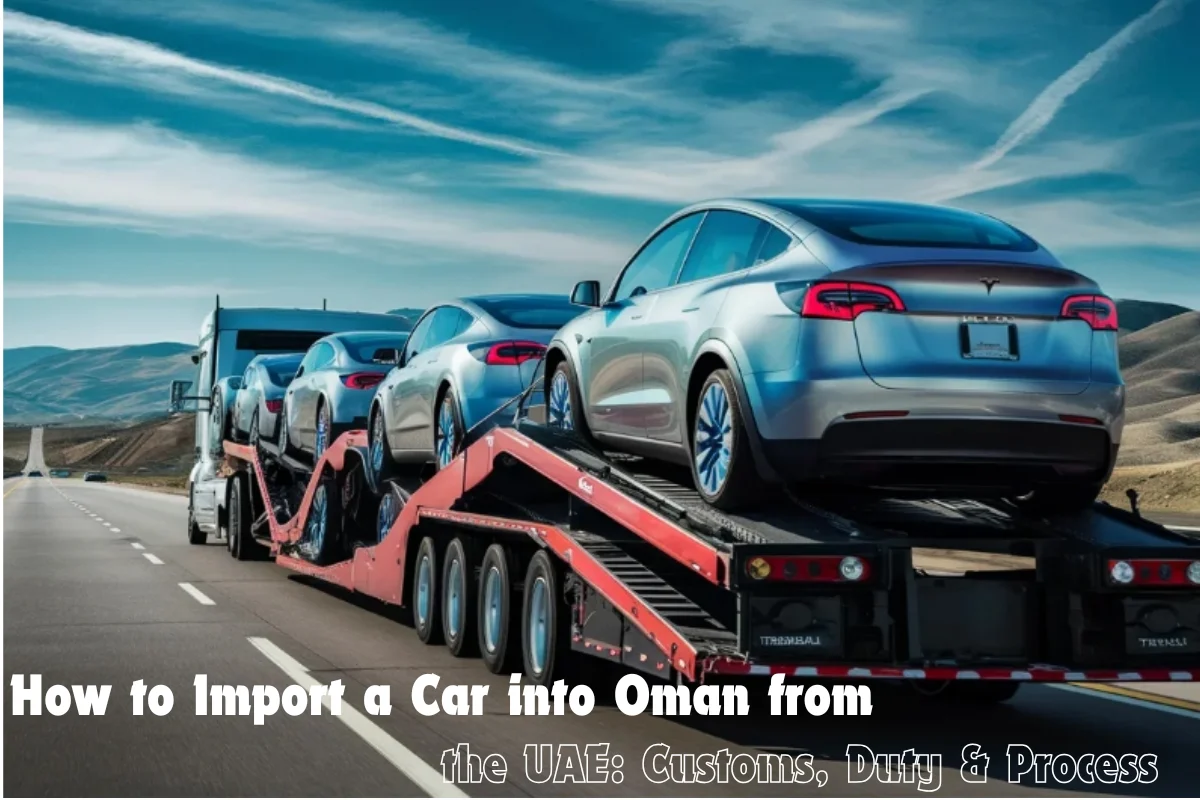
- Car carrier trailer
- Flatbed truck
- Driving it across the border yourself (where that’s allowed)
Most people go with an enclosed or open car carrier, and a good logistics partner can arrange this side of things for you.
Step 4: Customs Clearance at UAE Border
Before leaving the UAE, the vehicle goes through export processing, which involves:
- An export declaration
- Document verification
- A vehicle inspection
Once that’s all approved, you’re clear to head toward Oman.
Step 5: Customs Clearance in Oman
One of the most important parts of the whole journey when you import car to Oman is getting through customs clearance in Oman successfully.
Omani Customs will check things like:
- Vehicle documents
- The Vehicle Identification Number (VIN)
- Export Certificate
- Purchase invoice
- Import declaration
It’s only once customs clearance in Oman is complete that the vehicle can be legally imported.
Customs Duty for Importing Cars into Oman
Bringing a car in isn’t always free of charges – when you import car to Oman, duties and taxes can apply depending on a few factors.
These usually come down to:
- The value of the vehicle
- CIF value (Cost, Insurance, and Freight)
- What category the vehicle falls into
- Whatever customs regulations are currently in place
In some cases, GCC agreements offer exemptions or a simpler process for vehicles that qualify.
It’s always worth double-checking the latest customs rates before you make the move.
Customs Clearance in Oman Explained
A lot of importers get nervous about this stage, but honestly, it’s a lot less stressful once your paperwork is in order from the start.
The process generally looks like this:
- Submitting the import declaration
- Paying customs duty, if it applies
- A vehicle inspection
- Document verification
- Customs approval
- Vehicle release
Working with an experienced logistics company goes a long way toward avoiding delays at this stage.
Vehicle Inspection After Import
Once you import car to Oman, don’t be surprised if the vehicle needs to go through a few more checks, such as:
- A technical inspection
- A roadworthiness check
- Safety verification
- Emissions compliance
After it clears those, you can move on to registering the vehicle.
Registering Your Vehicle in Oman
Once customs clearance in Oman is done, the next step is registering the car with the Royal Oman Police (ROP).
You’ll typically need:
- Customs Clearance Certificate
- Insurance
- Identification documents
- Vehicle inspection report
- Registration application
Once registration goes through, you’ll walk away with Omani number plates.
Cost of Exporting a Car from UAE to Oman
The total cost to export car from UAE to Oman isn’t a fixed number – it shifts depending on a handful of things.
These include:
- The type of vehicle
- How it’s transported
- Export documentation fees
- Customs duty
- Insurance
- Registration charges
- Customs broker fees
Going with an experienced logistics company often ends up saving you from surprise costs down the line.
Common Challenges During Car Import
Even though the procedure to export car from Dubai to Oman is fairly straightforward overall, people still run into a few common snags when they import car to Oman:
- Missing documents
- Delays at customs
- Vehicle valuation that doesn’t match expectations
- Incomplete export paperwork
- Registration hiccups
- Insurance complications
A bit of planning upfront goes a long way toward avoiding these issues.
Tips for a Smooth Car Import
If you’re getting ready to export car from UAE to Oman, keep a few practical things in mind:
- Confirm ownership of the vehicle before you buy it.
- Check that the car is actually eligible for import into Oman.
- Get all your documents together well in advance.
- Sort out insurance before the vehicle is transported.
- Work with customs agents who know what they’re doing.
- Hold onto copies of every single document.
- Stay current on the latest customs regulations.
Why Choose Allied Movers?
When it comes to helping people export car from UAE to Oman, Allied Movers offers a complete, end-to-end vehicle relocation service.
Their services cover:
- Vehicle pickup from anywhere in the UAE
- Safe, reliable transportation
- Export documentation
- Customs assistance
- Customs clearance in Oman
- Door-to-door vehicle delivery
- Professional logistics support throughout
Whether you’re relocating or simply buying a car you like, having the right team takes the pressure off the whole journey, making sure your vehicle arrives safely and on time.
Final Thoughts
Choosing to export car from UAE to Oman is a smart move for buyers who want more choice and better prices than they’d typically find at home. Yes, there are legal and customs steps involved, but with a bit of planning, none of it needs to be complicated.
Understanding how to import car to Oman, getting your paperwork together early, completing customs clearance in Oman, and following the right procedure to export car from Dubai to Oman are really the keys to a smooth experience.
Partnering with experienced professionals gives you peace of mind the whole way through – from documentation and transport to customs handling and final delivery. Whether you’re bringing in a family car, a luxury vehicle, or a small commercial fleet, having the right help on your side makes the whole process faster, safer, and a lot less stressful.
Frequently Asked Questions
1. Can I import a used car from the UAE to Oman?
Yes, provided it meets Omani import regulations.
2. Is customs clearance in Oman required?
Yes, it is mandatory for all imported vehicles.
3. How long does it take to export a car from Dubai to Oman?
Typically, it takes a few days, depending on documentation.
4. Do I have to pay customs duty when importing a car to Oman?
Yes, applicable duties may apply based on customs regulations.
5. Can Allied Movers manage the complete car import process?
Yes, Allied Movers offers end-to-end vehicle relocation services.