
Moving from Oman to Qatar: Cost, Process & Shipping Options
Introduction So you’re relocating to Qatar. Maybe it’s a new job, maybe you’re starting a business, maybe you just want a change of scenery – whatever the reason, moving from Oman to Qatar isn’t something you want to wing. There’s planning involved, paperwork to sort out, and honestly, picking the right moving company matters more than people expect. Packing up a household, clearing customs, getting everything to your new door in one piece – each part of that chain affects how the whole move feels. That’s basically why Allied Movers exists. We’ve been doing international relocations long enough to know where things usually go wrong, and we offer door-to-door service so your belongings get to Qatar safely and on schedule. Good movers and packers in Qatar – and a solid team of Doha movers and packers on the receiving end – can turn what’s normally a stressful process into something fairly painless. Below, we’ll go through what moving from Oman to Qatar actually involves: the process, your shipping choices, and a realistic breakdown of the cost of moving from Oman to Doha. Why More People Are Moving from Oman to Qatar Qatar’s economy keeps growing, the infrastructure is solid, and job opportunities are plentiful – so it’s no surprise professionals and families keep choosing it. Being a neighboring GCC country also helps; the logistics are simpler than shipping your life halfway across the world. Whether you end up in Doha or elsewhere, bringing in experienced movers and packers in Qatar takes a good chunk of the stress off your plate and keeps your things from getting banged up along the way. Step-by-Step Process for Moving from Oman to Qatar Once you understand the stages, moving from Oman to Qatar stops feeling like a mystery and starts feeling manageable. 1. Schedule a Pre-Move Survey Movers will usually walk through your place and look at: This is where most of the cost of moving from Oman to Doha gets estimated, so it’s worth doing properly rather than rushing it. 2. Professional Packing This part matters more than people realize. Allied Movers packs using: Sloppy packing is where damage happens. Good packing is basically insurance in itself during moving from Oman to Qatar. 3. Inventory Preparation Every item gets written down before it leaves the house. That usually covers: A tidy inventory also makes customs go faster – nobody wants their shipment stuck at a checkpoint over a missing list. 4. Customs Documentation Expect some paperwork, including: A decent relocation company handles most of this for you, which honestly is half the reason to hire one. 5. Transportation Once customs signs off, your shipment moves to Qatar using whichever method you picked. 6. Delivery and Unpacking When it arrives, professional movers and packers in Qatar bring everything to your new place and can also handle: Shipping Options for Moving from Oman to Qatar There’s more than one way to get your things across the border – it comes down to budget and how fast you need it there. Road Freight For most people, road transport is the default choice for moving from Oman to Qatar. Benefits include: It works especially well for GCC relocations, given the shared borders. Air Freight Air freight makes sense when you need things fast: It’s quicker, no question – but you’ll pay for that speed. Sea Freight Sea freight fits bigger jobs: Slower, sure. But for a full household, it can save you a decent amount of money. Cost of Moving from Oman to Doha There’s no single number here – the cost of moving from Oman to Doha shifts depending on quite a bit. Key factors include: A one-bedroom apartment obviously costs less to move than a full villa – that part’s not surprising. If you want an actual number instead of a guess, the real answer comes from a proper survey with Allied Movers. Why Hire Professional Movers and Packers in Qatar There’s a reason people pay for experienced movers and packers in Qatar instead of doing it themselves. Advantages include: Reliable movers and packers in Qatar catch the mistakes before they become expensive ones. A lot of established Doha movers and packers also give you upfront pricing, so there’s no scrambling for extra cash mid-move. Choosing Reliable Doha Movers and Packers Once your stuff lands in Qatar, finding the right Doha movers and packers to take it from there matters just as much as the shipping itself. Look for companies that offer: A good set of Doha movers and packers is what makes the last mile actually feel effortless. Documents Required for Moving from Oman to Qatar Most relocations need: Keep this stuff organized ahead of time – customs delays over missing paperwork are avoidable and annoying. Tips for a Smooth Move A few things worth doing before the truck shows up: None of this is complicated, but skipping it is exactly how moves go sideways. Why Choose Allied Movers Allied Movers has spent years handling international relocations across the GCC – this isn’t our first rodeo. Our services include: Single apartment or entire family home – our movers and packers in Qatar handle both the same way: carefully, start to finish. Common Challenges During International Relocation Every international move hits a snag somewhere. Common issues include: Experienced movers and packers in Qatar have seen most of these before, which is exactly why they’re faster at solving them than you would be on your own. Pair that with a solid Doha movers and packers team on the ground, and most of these problems never even reach you. Final Thoughts International moves sound overwhelming until you break them down – then they’re just a series of steps. With decent planning, careful packing, and the right people helping, moving from Oman to Qatar turns into something organized instead of chaotic. Know the process, pick the right shipping method, and get a realistic read on costs before you commit to anything. Pair that with trusted Doha movers
Selling Your Car in Oman Before Moving Abroad: ROP Deregistration, Title Transfer & Export Certificate Process

Introduction Let’s be honest – when you’re preparing to leave Oman for good, your car is probably the last thing you want to spend energy on. You’ve got visa paperwork, shipping containers, goodbye dinners, and a hundred other things competing for your attention. But leaving the vehicle situation until the last minute is one of the most common mistakes people make, and it can cause real delays right when you can least afford them. For most expats and long-term residents, selling car in Oman before departure ends up being the most practical decision. It puts cash in your pocket, eliminates the stress of managing a vehicle from abroad, and cuts out the ongoing registration and insurance costs that keep piling up whether you’re in the country or not. What surprises many people, though, is that selling isn’t just a handshake deal. There’s a legal process behind it – ownership transfers, car deregistration Oman requirements, export certificates if you’re taking the car out – and if you go in without knowing what’s involved, things can get messy. This guide breaks it all down, including what the ROP process actually looks like and how Allied Movers can take some of the broader relocation burden off your plate. Why Consider Selling Your Car Before Moving Abroad? Shipping a car internationally sounds straightforward until you start looking at the actual numbers. Import duties at the destination, freight charges, compliance modifications, and customs clearance fees can easily push the total cost well above what the vehicle is worth – especially for older models. That’s why selling car in Oman before you leave tends to make more sense for most people. A few of the more practical reasons: That said, before any of this can happen, you need to understand what car deregistration Oman involves – because depending on your situation, it may or may not be part of your process. Preparing Your Vehicle for Sale Getting your documents together before you start showing the car to buyers is something most people skip – and then regret. A buyer who’s serious will want to see paperwork, and gaps in the records will either kill the deal or drag it out. Gather Essential Documents Pull these together early: Having everything ready upfront makes selling car in Oman go faster, and it gives buyers confidence that you’re not hiding anything about the vehicle’s history. Check Outstanding Fines Before you even think about starting the car deregistration Oman process, log in and check whether there are any unpaid traffic fines sitting against the vehicle. This is one of those small things that quietly blocks everything else – ownership transfers included. Get it sorted before it becomes someone else’s problem to point out. Understanding the ROP Vehicle Transfer Process All vehicle registration, transfer, and car deregistration Oman matters run through the Royal Oman Police. It’s their system, their process, and both buyer and seller need to show up to it properly. Step 1: Agreement Between Buyer and Seller Before anything goes through ROP, you and the buyer need to be aligned on the basics – price, payment method, transfer date, and who’s covering the transfer fees. It sounds obvious, but verbal agreements have a way of getting fuzzy once money changes hands. Write it down. Step 2: Vehicle Inspection (If Required) Depending on the age of the car and its registration history, an inspection may be required before the transfer can proceed. This covers roadworthiness, VIN verification, and general compliance with registration requirements. It’s worth scheduling this early rather than leaving it to the week you’re supposed to leave. Step 3: Ownership Transfer Once everything checks out, the transfer goes through the ROP system. The registration moves into the buyer’s name, and your legal connection to the vehicle ends there. If you’re leaving the country, get written confirmation of this transfer before you board that plane. You don’t want to be chasing paperwork from overseas. What Is Car Deregistration in Oman? Car deregistration Oman is the process of removing a vehicle from active registration records entirely. It’s not the same as a transfer – it’s a full removal from the system, and it’s specifically required in certain situations. You’ll typically need car deregistration Oman when: A lot of people searching the how to sell and deregister car in Oman before moving abroad ROP process assume deregistration is always required. It isn’t. Here’s the simple version: Local Sale If you’re selling car in Oman to another resident who’s staying in the country, a standard ownership transfer is all you need. Deregistration doesn’t enter the picture. Vehicle Export If the car is leaving Oman permanently, car deregistration Oman is a required step before export documents can be issued. You can’t skip it and come back to it later – it has to happen first. Exporting Your Vehicle Instead of Selling Some people just aren’t ready to part with their car. Maybe it’s a vehicle you spent years modifying, or replacement costs at your destination are genuinely higher, or it’s simply a model that holds its value better than most. Whatever the reason, exporting is a legitimate option – it just comes with more steps. Reasons to Export a Vehicle People who choose to export car Oman rather than sell locally usually have one of these situations: Run the numbers honestly before committing. Freight, insurance during transit, customs at the other end – it adds up. Sometimes selling car in Oman locally and buying something new at the destination is genuinely the better call financially. Export Certificate Process If you’re going ahead with the export, the certificate is one of the most important documents in the whole process. Without it, shipping companies won’t touch the vehicle, and customs at the destination won’t clear it. The export certificate confirms legal ownership, deregistration status, permission for export, and vehicle identification details – essentially, it’s the document that proves the car is yours to take and that Oman has no outstanding claim on it. Steps
Transit Insurance vs Moving Insurance: Which One Do You Actually Need?
Introduction Nobody really thinks about insurance when they’re planning a move. You’re busy getting quotes, figuring out what to pack first, sorting out utility transfers – insurance is usually the thing that gets added to the list last, if at all. And then something gets damaged in transit, and suddenly it becomes the only thing you wish you’d thought about sooner. If you’re moving within Oman or heading somewhere overseas, knowing the difference between transit insurance and moving insurance Oman before your move date isn’t just useful — it’s the kind of thing that can save you from a genuinely painful situation. Because yes, there is a difference, and it’s not a small one. The differences between transit insurance and moving insurance international relocation coverage can determine whether you’re financially protected throughout your entire move or just for part of it. Let’s get into it properly. Why Insurance Matters During a Move Something a lot of people don’t fully appreciate until it happens to them: damage during a move doesn’t always mean someone was careless. A truck hits a pothole at the wrong angle. A container shifts during loading at the port. A shipment sits in storage during a delay and gets exposed to heat or humidity. These things happen even when the people handling your belongings are experienced and genuinely careful. Professional movers reduce risk significantly – but they can’t eliminate it. Road conditions, weather, the reality of handling heavy furniture through tight spaces, customs inspections that involve unpacking and repacking – there are a lot of moments in a move where something can go wrong through no fault of anyone involved. Having transit insurance or moving insurance Oman coverage doesn’t prevent any of that. What it does is make sure you’re not left covering the cost entirely on your own when it does. What Is Transit Insurance? Transit insurance is a fairly focused product. It’s designed specifically to cover your belongings during transportation – meaning from the point they’re loaded onto a vehicle or vessel to the point they arrive at the destination. Road, sea, air, rail – it doesn’t matter how your goods are moving. Transit insurance is built around that specific window of risk. It’s not concerned with what happened before the truck left or what happens after it arrives. The journey itself is what it covers. Common uses include: For people whose main concern is what happens during transport – not during packing, not during unloading – transit insurance is a practical and usually cost-effective option. What Is Moving Insurance? Moving insurance Oman policies look at a move differently. Rather than focusing on the transportation phase alone, they’re built to reflect the reality that a move involves a lot more than just the journey from A to B. Damage can happen when someone’s packing quickly and doesn’t wrap something properly. It can happen when a heavy wardrobe is being awkwardly manoeuvred down a staircase. It can happen when goods sit in a warehouse for two weeks between legs of an international shipment. Moving insurance Oman is designed to cover more of those moments. Depending on the policy, this can include: For families moving with a full household – a mix of furniture, appliances, fragile items, things that are expensive or sentimental – that wider scope tends to make a real practical difference. Understanding the Differences Between Transit Insurance and Moving Insurance International Relocation This is where most people get confused, and honestly, it’s understandable. The terminology overlaps, the products sound similar, and providers don’t always explain the distinction clearly. The differences between transit insurance and moving insurance international relocation plans are primarily about how much of the moving process each policy actually covers. Feature Transit Insurance Moving Insurance Main Focus Transportation risks Entire moving process Coverage Period During transit only Packing, transit, unloading International Relocation Commonly used Often available with broader protection Storage Coverage Limited May include temporary storage Handling Damage Usually limited Often included Transit coverage is narrower by design. It’s focused, clear, and works well when the journey itself is the primary risk. Moving insurance covers more ground – more stages, more types of damage, more of the overall process. Which one suits you depends entirely on what your move actually looks like. When Do You Need Transit Insurance? Long-Distance Relocations More road time means more exposure. A long domestic move or an overland international shipment involves hours or days of your belongings being on the move – transit insurance covers that entire window. International Shipping Overseas moves are genuinely complex logistically. Your shipment moves through ports, gets handled multiple times, clears customs in at least two countries, and often travels by more than one mode of transport. Transit insurance is a standard part of managing that kind of exposure. High-Value Items Artwork, high-end electronics, antiques, anything that would be painful or impossible to replace – these deserve coverage that specifically addresses what could happen to them enroute. Commercial Cargo For businesses moving equipment or stock between locations, transit insurance is typically a standard operational requirement, not a discretionary add-on. When Do You Need Moving Insurance? Full-Service Relocations When a moving company is handling your packing, loading, transport, and unpacking, risk doesn’t sit only in the journey. Moving insurance Oman extends coverage to the other stages, which matters a lot when your belongings pass through many pairs of hands. Family Moves Families relocate with everything – kids’ furniture, kitchen appliances, the good crockery that lives at the back of the cupboard, the things that can’t be replaced because they were handed down. Moving insurance Oman is built for that kind of breadth. International Relocation Projects A full household international move isn’t a single event – it’s a sequence of them. Packing, container loading, freight, customs, warehousing, final delivery. The differences between transit insurance and moving insurance international relocation plans matter most here because there are simply more stages where something can go wrong, and basic transit coverage may leave gaps in between.
Exporting a Car from Oman: What Documents You Need and How the Process Works
Introduction Nobody tells you how much paperwork is involved until you’re already knee-deep in it. That’s the honest truth about trying to export a vehicle from Oman. It’s not impossible – far from it – but there’s a version of this process that goes smoothly, and a version that drags on for weeks because of one missing document or a customs form filled out incorrectly. The difference between the two usually comes down to how prepared you were going in. So whether you’re leaving Oman after years of living here, selling a car to someone in another country, or just need your vehicle where you’re headed next – this is the guide I wish existed when I started asking questions. Real information, in plain language, about what actually needs to happen when you want to export car Oman. Why People Export Cars from Oman People do this for all sorts of reasons, and honestly, no two situations look exactly the same. Some are expats who’ve been here for years, built a life, and have a car they’re genuinely attached to. Leaving it behind isn’t something they’re willing to do. Others have found buyers overseas and want to move the vehicle without any unnecessary drama. And then there’s the commercial side of things – Oman’s ports are well-positioned geographically, which makes it a practical base for businesses involved in international vehicle trading. Whatever your reason, the starting point is always the same. You need to understand the rules, and you need your car shipping documents sorted out before anything else can move forward. Understanding the Vehicle Export Process In broad strokes, here’s what the process looks like when you export car Oman: Simple enough on paper. In practice, each of those steps has its own timing, its own requirements, and its own potential for delays if something isn’t handled correctly. The order matters too – you can’t jump ahead and expect things to work out. Experienced logistics providers like Allied Movers have seen every version of this process, including the complicated ones, and that experience is genuinely valuable when you’re navigating it for the first time. Documents Required for Vehicle Export from Oman This is where most people either set themselves up or trip themselves up. The documents required for vehicle export aren’t individually complicated, but taken together they form a complete picture that authorities need to see. A gap anywhere in that picture creates friction, and friction in customs means delays. Here’s what you’ll need: 1. Vehicle Registration Card Your original registration card is the first thing anyone will ask for. It proves the vehicle is yours, it’s registered in Oman, and everything is above board. This sits at the very top of the documents required for vehicle export list – and it must be current. An expired card won’t cut it. 2. Owner’s Passport Copy Straightforward, but essential. Customs processing requires verifiable identity, and a copy of the vehicle owner’s passport is how that gets confirmed. 3. Oman Residence Card (If Applicable) For expats, expect to be asked for your resident card too. It’s an extra layer of verification that ties your legal status in Oman to the export request. 4. Export Certificate This one gets issued by the relevant authorities after they’ve reviewed your ownership details and checked the vehicle information. It’s essentially official confirmation that everything is in order. For compliance shipping car from Oman abroad, this document matters at both the departure and arrival points – don’t treat it as a formality. 5. Purchase Invoice Not always required, but frequently requested. It helps establish how much the vehicle is worth and traces the original ownership. Have it ready even if nobody ends up asking for it. 6. Customs Clearance Documents These confirm the vehicle has fully completed the clearance process – not just started it. These car shipping documents are legally required before the vehicle leaves the country. No clearance, no departure. 7. Shipping Instructions and Bill of Lading Your shipping company handles this one. The Bill of Lading is your proof that the vehicle was received and loaded. Keep a copy somewhere safe – you’ll need it when the vehicle arrives at its destination. Importance of Compliance When Exporting a Vehicle Here’s something that catches people off guard: getting out of Oman is only part of the challenge. The country you’re shipping to has its own rules, and compliance shipping car from Oman abroad means you have to satisfy both sets of requirements at the same time. Some countries won’t accept vehicles over a certain age. Others have emissions standards that older engines simply don’t meet. Some slap heavy import duties on certain makes. None of this is hidden information, but people don’t always look into it early enough – and finding out at the wrong moment is genuinely costly. If you skip this step and it comes back to bite you, the consequences can include: Before you commit to anything, find out exactly what the destination country requires. It’s a few hours of research that can save weeks of problems. Vehicle Inspection Before Export At some point before the vehicle gets anywhere near a vessel, it’ll go through an inspection. Inspectors are checking: What they’re really doing is making sure the car sitting in front of them matches the documents required for vehicle export on file. If there’s a discrepancy – even something minor – things stop until it’s resolved. Book your inspection early. Don’t leave it to the last minute and assume it’ll be fine. Shipping Methods Available Once the paperwork side is under control, you need to decide how the vehicle is actually going to get there. There are a few options worth understanding. Roll-On/Roll-Off (RoRo) The car gets driven onto the ship, secured, and transported. It’s the most common option for standard vehicles and usually the most affordable. If you’re not shipping anything particularly high-value and the route is straightforward, RoRo does the job. Container Shipping The vehicle goes into
Packing Supplies Checklist: What Materials You Need for a Domestic or International Move
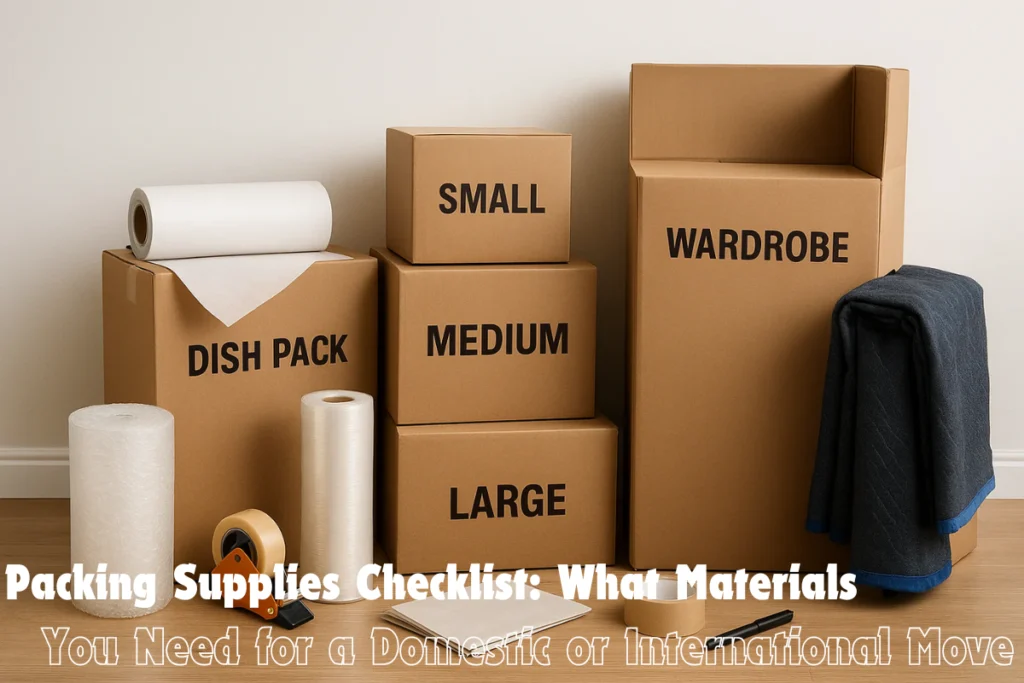
Introduction Moving to a new home is genuinely one of those things nobody tells you is as exhausting as it actually is. You think you’re ready, and then you’re standing in your living room at 11pm surrounded by half-filled boxes wondering why you didn’t start three days earlier. Here’s the thing though – most of that chaos comes down to one thing: not having the right shifting materials sorted before you begin. Get this part right and everything else becomes manageable. Whether you’re moving a few streets over, relocating across Oman, or shipping your entire life to another country, the packing supplies Allied Movers professionals swear by are the same ones that’ll save your belongings and your sanity. People always underestimate this. They figure a few boxes from the supermarket and some leftover tape will do the job. Sometimes it does. But then you unwrap your grandmother’s favorite dish and find it in three pieces, or you notice that deep scratch across the wooden cabinet you saved up for. That’s when it hits you. Different things need different protection – your books need different treatment than your wine glasses, and your sofa needs something entirely different from your laptop. Without decent shifting materials, you’re basically gambling with everything you own. This guide walks through exactly what you need, room by room, covering everything from the basics to the stuff people always forget. Think of it as your practical packing supplies for a domestic relocation complete materials checklist Oman Allied Movers reference – whether you’re handling the whole thing yourself or bringing in professionals. Why Choosing the Right Shifting Materials Matters Here’s something worth thinking about. Your belongings don’t just get loaded into a truck and magically appear at the other end. They get wrapped, stacked, bounced around on roads, shifted at multiple points, and eventually unloaded – sometimes more roughly than you’d like. Good shifting materials are what stand between your things and all of that. The difference shows up in ways that actually matter: The team at packing supplies Allied Movers has seen both sides of this – moves that went smoothly because everything was properly packed, and moves where corners were cut and it showed. Essential Packing Supplies Checklist 1. Moving Boxes This is where everything starts. Boxes are the backbone of your shifting materials and getting the sizing wrong creates problems at every stage. What you’ll actually need: Strong corrugated boxes are among the most critical packing supplies Allied Movers relies on because they hold their shape even when stacked and don’t give way under pressure. 2. Packing Tape Tape sounds boring until a box opens mid-carry and everything lands on the floor. What actually matters here: Tape is one of those shifting materials that becomes critical at the worst possible moment if you run out. 3. Bubble Wrap If something can break, it needs bubble wrap. No exceptions. Use it generously on: Adding bubble wrap to your packing supplies Allied Movers kit is genuinely the most effective thing you can do for anything fragile. 4. Packing Paper This one gets overlooked constantly and it shouldn’t. Packing paper wraps cleanly, leaves zero residue, and cushions surprisingly well for something that’s basically just paper. It’s perfect for: Experienced movers at packing supplies Allied Movers usually layer packing paper with other shifting materials rather than relying on just one. 5. Stretch Wrap That transparent clingy film does far more work than it looks like it does. Particularly good for: Stretch wrap is one of those packing supplies Allied Movers never leaves behind, regardless of whether it’s a local or international job. 6. Furniture Blankets Heavy furniture needs proper protection and furniture blankets deliver it. They give large pieces a thick padded layer that absorbs the knocks during loading and unloading. They prevent: Quality furniture blankets are some of the most valuable shifting materials you can have when you’re moving anything expensive or irreplaceable. 7. Labels and Markers The cheapest thing on this entire list. Also, genuinely, one of the most important. Label every single box with: It’s the packing supplies Allied Movers always insists on because the difference when you arrive at the other end is enormous. Without labels, every box is a mystery. 8. Ziplock Bags Small things vanish during moves. It’s just what they do. Ziplock bags stop that. Use them for: Tape the bag directly to the item it came from. A minor addition to your shifting materials kit that prevents a genuinely infuriating amount of frustration. 9. Mattress Covers Mattresses pick up dirt, dust, and moisture faster than you’d expect when they’re not wrapped up. A simple plastic mattress cover costs almost nothing and completely solves this. For any move over a significant distance, mattress covers are essential packing supplies Allied Movers always recommends – you sleep on your mattress every single night, so it’s worth protecting. 10. Corner Protectors Corners get knocked. It happens during loading, doorways, staircases, and unloading. Corner protectors absorb that impact so your furniture doesn’t have to carry the evidence. Especially worth using on: Small, inexpensive shifting materials that make a disproportionate difference for anything delicate or valuable. Additional Packing Supplies for International Relocations International moves are a different beast entirely. Longer transit times, more handling at different stages, and exposure to humidity, temperature changes, and varying environmental conditions all add up. Your standard kit genuinely needs upgrading. Additional packing supplies Allied Movers recommends for international moves: When belongings are travelling by sea or air, proper shifting materials carry far more responsibility than most people realize until something goes wrong. Room-by-Room Packing Materials Guide Kitchen Almost always the trickiest room. There’s a lot of breakable stuff packed into a small space and none of it is easy to replace. You’ll need: The kitchen needs more shifting materials per box than anywhere else in the house. Don’t rush it and don’t cut corners here. Living Room Focus on surfaces and electronics: These are the packing supplies Allied Movers recommends for
International Relocation Insurance: Types, Coverage Options & Exclusions Explained

Introduction A colleague of mine relocated from Karachi to Dubai three years ago. Decent moving company, careful packing, no obvious red flags. When her shipment finally arrived, her brand new LG television had a cracked screen and an entire box of kitchen appliances was simply gone. She had declined the insurance option because – and I am quoting her directly here – “what are the chances, right?” She ended up replacing everything out of pocket. In a new city. Before she had even received her first salary in her new job. The chances, it turns out, are higher than most people think. This is not a scare story. International moves go smoothly all the time, and working with solid companies like Allied Movers genuinely reduces the risk of things going wrong. But reducing risk is not the same as eliminating it. Ships hit weather. Containers get mishandled. Warehouses flood. Customs holds drag on for weeks. And none of that cares how carefully you planned or how reputable your moving company is. Relocation insurance Allied Movers professionals recommend is what stands between a bad experience and a genuinely damaging financial situation. This guide is written to help you understand your actual options – not the glossy summary version, but the real breakdown of what each type of coverage means, what it protects, and where it stops protecting you. Why Relocation Insurance Matters Most people picture their belongings being carefully loaded onto a truck and driven to a port, then unloaded gently at the other end. The reality is considerably messier. Your things pass through multiple sets of hands across the entire journey. They get packed, loaded, transported to a port or airport, processed through export customs, loaded onto a ship or plane, unloaded at the destination country, processed through import customs, possibly held in a warehouse or storage facility for days or weeks, then transported again and finally delivered. Each handoff is another variable. Each transfer point is another opportunity for something to go sideways. The whole process might take four weeks. It might take ten. And across that entire journey, your belongings are not always being handled by people who know or care what is inside the boxes. International moving insurance Allied Movers experts bring up in almost every client consultation is not pessimism – it is just math. The more stages a shipment goes through, the more exposure it has to damage, loss, or delay. Having relocation insurance Allied Movers clients can actually rely on means that when something does happen, you are dealing with an inconvenience rather than a financial crisis. Types of Relocation Insurance Not all insurance is the same and not all moves need the same level of coverage. Here is what each main type actually looks like in practice. 1. Total Loss Coverage Total loss is the bare minimum option and I will be honest with you – for most people shipping a household of belongings internationally, it is barely worth calling insurance at all. It only pays out if your entire shipment is completely and totally destroyed or lost. A container that sinks to the bottom of the ocean. A catastrophic fire that leaves nothing. An event so complete that literally nothing survives. What it does not cover is everything else. Your sofa arrives with three broken legs – not covered. Half your boxes show water damage – not covered. Your shipment arrives minus two crates that somehow got separated somewhere between Karachi and London – not covered. The shipment technically arrived, so technically it was not a total loss. It is the cheapest relocation insurance Allied Movers option. It is cheap for a reason. 2. All-Risk Coverage This is where most people land once they actually sit down and think about it properly, and it is the most recommended form of relocation insurance Allied Movers professionals suggest across the board. The name causes confusion – all-risk does not literally mean everything is covered under every circumstance. What it means is that coverage applies broadly unless something is specifically excluded, rather than applying narrowly only to listed events. That is a significant difference in practice. Accidental damage, theft, water damage, fire, loss during transit, most natural disasters – all of this falls under a standard all-risk policy. If your items are professionally packed by Allied Movers rather than packed by you, you are also in a much stronger position when it comes to claim eligibility. For families moving valuable household goods internationally, this international moving insurance coverage exclusions and options explained Allied Movers service is the one most worth understanding in detail. 3. Named Perils Coverage Named perils sits in the middle. The policy names specific events – fire, theft, collision, vessel sinking, earthquake, maybe a few others – and covers you against those and only those. Anything that happens because of a cause not written into the policy is simply not covered, regardless of how reasonable your claim might seem. It is more affordable than all-risk and for some moves, particularly lower-value shipments, it is a perfectly sensible choice. The critical thing is reading what is actually on that list rather than assuming it includes what you think it does. There can be some real gaps in there. 4. Transit Insurance Transit insurance covers the transportation phase specifically – while your goods are actively moving from one point to another. Damage during loading or unloading, cargo damage during shipping, losses that occur while goods are in transit – this is what it handles. It is a practical, frequently chosen form of international moving insurance Allied Movers clients use particularly for more direct international shipments without extended storage periods. If your move follows a fairly clean timeline without long warehouse stops, transit insurance can cover the period where the risk is actually highest. Coverage Options in International Relocation Insurance The type of insurance is one decision. How that insurance is structured is another. This is what determines what actually lands in your bank
Insured vs Uninsured Movers in Oman: What Happens When Something Goes Wrong
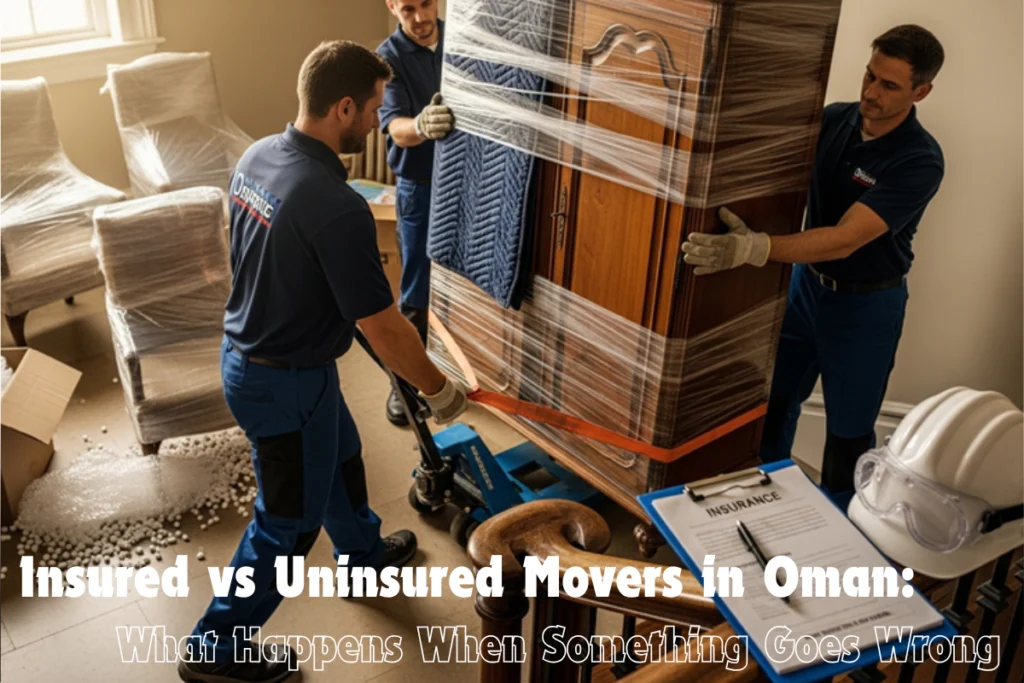
Introduction Let’s be honest – most people don’t think about moving insurance until something breaks. And by then, it’s too late. You open a box and your grandmother’s lamp is in three pieces, or a whole crate goes missing somewhere between Muscat and wherever you were headed. That’s the moment it hits you: did I hire someone who actually has coverage, or did I just go with whoever gave me the cheapest quote? I’ve seen both situations play out. The difference is not pretty. That’s why understanding moving insurance Oman Allied Movers before anything gets packed is the kind of thing that saves you real money and a lot of headaches. Why Moving Insurance Matters in Oman People underestimate how much can actually go wrong during a move. It’s not just big obvious accidents – sometimes it’s a couch getting gouged coming around a tight stairwell, or a box of electronics sitting in a leaky container for two days. Sometimes stuff just vanishes and nobody can explain it. Your belongings aren’t just objects. Some of them cost a fortune to replace. Some of them can’t be replaced at all. Moving insurance Oman Allied Movers is what stands between you and absorbing that loss entirely on your own. The kinds of risks that actually come up: Companies like Allied Movers don’t just quietly offer insurance as a footnote – they explain what’s covered, what’s not, and what you do if something goes wrong. That clarity matters. A lot of people find out too late that their movers had no real process for handling claims at all. When you work with insured movers Oman Allied Movers, at least you know there’s someone accountable. What Are Insured Movers? An insured mover is basically a company that has actual coverage backing up their work – from the moment they start wrapping your stuff to when it arrives at the other end. If they damage something, there’s a formal way to get compensated. Not just a phone call that goes nowhere. Companies offering moving insurance Oman Allied Movers will usually give you different tiers of coverage depending on what you’re shipping and how valuable it is. The better ones walk you through all of it before the job starts, not after something breaks. In practical terms, what insured movers Oman Allied Movers actually gives you: Allied Movers works this way because that’s what professional relocation actually looks like. Not just a truck and a handshake. What Happens When You Hire Uninsured Movers? Here’s the thing – uninsured movers aren’t always obviously bad. Some of them do a perfectly fine job. The problem only becomes visible when something goes wrong, and then it becomes very visible, very fast. No Compensation for Damage Without moving insurance Oman Allied Movers, there’s no formal process for recovering costs. Your wardrobe arrives scratched? You absorb it. A box doesn’t show up? Tough luck. There’s no claim to file because there’s no policy behind it. Nobody’s Really Accountable Uninsured companies tend to operate without proper standards or any customer support infrastructure worth mentioning. When there’s no insurance requirement, there’s often no accountability requirement either. Getting in Touch Becomes Impossible This one is frustratingly common. The move ends, something is wrong, and suddenly the company is impossible to reach. Calls go unanswered. The person you dealt with doesn’t work there anymore. Nobody knows anything. Surprise Costs Mid-Move Some uninsured movers quote low on purpose, then add charges once your things are already in the truck. At that point your options are limited. You pay or you don’t get your belongings. International Moves Without Coverage Are a Real Gamble For anyone shipping overseas, the absence of international moving insurance coverage what is covered and not covered Oman Allied Movers is a serious problem. Shipments going abroad pass through a lot of hands over a long distance. A lot can go wrong. Without coverage, every one of those risks lands entirely on you. Common Problems During a Move Even really good movers run into problems sometimes. What separates the professionals is how they handle it when they do. Broken Furniture Heavy pieces are vulnerable – wardrobes, bed frames, dining tables. Getting them through tight spaces without damage takes skill and, occasionally, luck. Even careful movers sometimes come up short. Missing Boxes A box gets separated at the loading point, mislabelled, or left behind during a multi-stop job. Without detailed inventory documentation, tracking it down is nearly impossible. Water and Weather Damage A rainy loading day, a container with a slow leak, humidity in a warehouse – any of these can ruin upholstered furniture, wooden pieces, paper documents, and electronics without anyone noticing until it’s too late. Delayed Delivery International shipments regularly hit customs delays. Port backlogs happen. These aren’t always anyone’s fault, but professional movers manage them. Uninsured operators often don’t communicate about delays at all. Storage Problems If your goods spend time in interim storage, the condition of that facility matters enormously. Poor ventilation and pest issues are more common than the industry likes to talk about. None of this is meant to be scary – it’s just reality. And it’s why people who’ve moved before tend to prioritise insured movers Oman Allied Movers the second time around. Understanding International Moving Insurance Coverage Moving internationally is a completely different level of complexity. Your shipment might travel for weeks, get transferred between multiple ports, be handled by teams you’ll never meet, and pass through customs inspections you have no control over. The exposure to risk is genuinely higher than a local move. Getting a clear picture of international moving insurance coverage what is covered and not covered Oman Allied Movers before anything leaves Oman isn’t optional – it’s the only sensible approach. What’s Usually Covered A solid international policy typically covers: Good providers of moving insurance Oman Allied Movers go through this with you before shipment – not after. What’s Usually Not Covered This is the part that catches people out. Standard exclusions
Moving from Oman to USA: Complete Relocation & Shipping Guide
Introduction Let me be honest with you – moving from Oman to the United States is not something you figure out in a weekend. It took my colleague three months just to sort out what she could and could not ship, and she still ended up leaving her favourite coffee machine behind because nobody told her about the voltage compatibility issue until it was too late. Whether you are moving for work, chasing a degree, joining family, or simply ready for something completely different, the excitement of what is ahead is real – but so is the mountain of logistics standing between you and your new front door in America. The moment most people realise they cannot manage this alone is usually somewhere around the third spreadsheet. That is when shipping from Oman to USA Allied Movers customers trust becomes less of a luxury and more of an obvious necessity. Having professionals handle the heavy lifting – literally and figuratively – changes the entire experience. This guide covers what you actually need to know, drawn from the kind of practical detail found in the international movers Oman to USA cost shipping process guide Allied Movers clients lean on before making any firm decisions. Why People Are Moving from Oman to the USA Walk into any Omani expat group online and you will find a dozen different stories. A nurse heading to Texas for a hospital placement. A family relocating to Michigan to be closer to aging parents. A young engineer who landed a tech job in Seattle and has four weeks to figure out what to do with a three-bedroom apartment worth of furniture. The reasons are personal and varied, but the logistical challenge is almost universal. Nobody tells you upfront just how many moving parts there are – and that is not a pun. Visas, shipping timelines, customs declarations, restricted items, storage gaps – it compounds quickly. That is precisely why international movers Oman Allied Movers provides has become the go-to choice for people who want the process handled by someone who has done it hundreds of times before. Planning Your International Move Here is the uncomfortable truth about international move timelines: whatever window you think you need, add another month. People consistently underestimate how long documentation takes, how hard it is to declutter years of accumulated belongings, and how quickly the weeks disappear once you announce you are leaving. Two to three months before your departure date is the realistic minimum. That runway lets you coordinate your shipping from Oman to USA Allied Movers team properly, gather paperwork without last-minute panic, and make decisions about your belongings with a clear head rather than a frantic one. Create a Moving Checklist A checklist sounds basic, but when you are juggling a dozen different priorities simultaneously, it is what stops things from slipping. Yours should cover: International movers Oman Allied Movers professionals can help build a timeline around your specific departure date rather than handing you a generic one-size-fits-all template. Choosing the Right Shipping Method This is one of those decisions that feels simple until you start pricing it out. For shipping from Oman to USA Allied Movers handles, two methods dominate. Air Freight Fast, yes. Expensive, also yes. Air freight makes sense when you are sending a small volume of items and timing genuinely cannot flex. If you are shipping the contents of an entire home, the cost per kilogram will make your eyes water. Sea Freight This is what most families actually use when they are relocating permanently, and for obvious reasons. The transit time is longer – typically several weeks – but the cost structure is completely different. You can ship furniture, appliances, boxes, and everything else without the per-kilogram anxiety that air freight brings. International movers Oman Allied Movers will have a frank conversation with you about which option actually fits your situation, rather than defaulting to whatever earns them more. Understanding the Shipping Process Most people have a vague sense that their belongings get packed, put on a ship, and eventually appear at their new address. What actually happens in between is more involved – and understanding it helps you avoid the surprises that catch people off guard. The international movers Oman to USA cost shipping process guide Allied Movers clients request most often breaks it down like this: 1. Pre-Move Survey Someone comes to your home, walks through every room, and estimates what you are actually dealing with in terms of volume. This is what your shipping from Oman to USA Allied Movers quote gets built on, so be thorough – show them everything, including the stuff in the garage you have been ignoring for two years. 2. Packing and Labeling Professional packing is genuinely different from how most of us pack when moving locally. Export-grade materials, proper cushioning for fragile items, specific techniques for furniture and appliances – this is not bubble wrap and hope. It is the difference between your grandmother’s china arriving intact and arriving in pieces. 3. Documentation This is where a lot of DIY international moves fall apart. You will need: International movers Oman Allied Movers staff handle the preparation and make sure everything is correct before submission. One wrong entry on a customs declaration can hold your entire shipment for days or longer. 4. Customs Clearance Your shipment goes through customs in Oman on the way out and US customs on the way in. Professional movers manage the bulk of this – which, if you have ever tried to navigate customs bureaucracy independently, you will immediately appreciate. 5. Transportation and Delivery Once everything clears, your belongings move to your new address. Door-to-door means exactly that – no arranging your own transport from a port facility miles from where you actually live. Cost of Moving from Oman to USA Nobody wants a vague answer here, so let us be direct. The cost of shipping from Oman to USA Allied Movers quotes for each client depends on several real
What to Store and What to Sell Before Moving Internationally from Oman
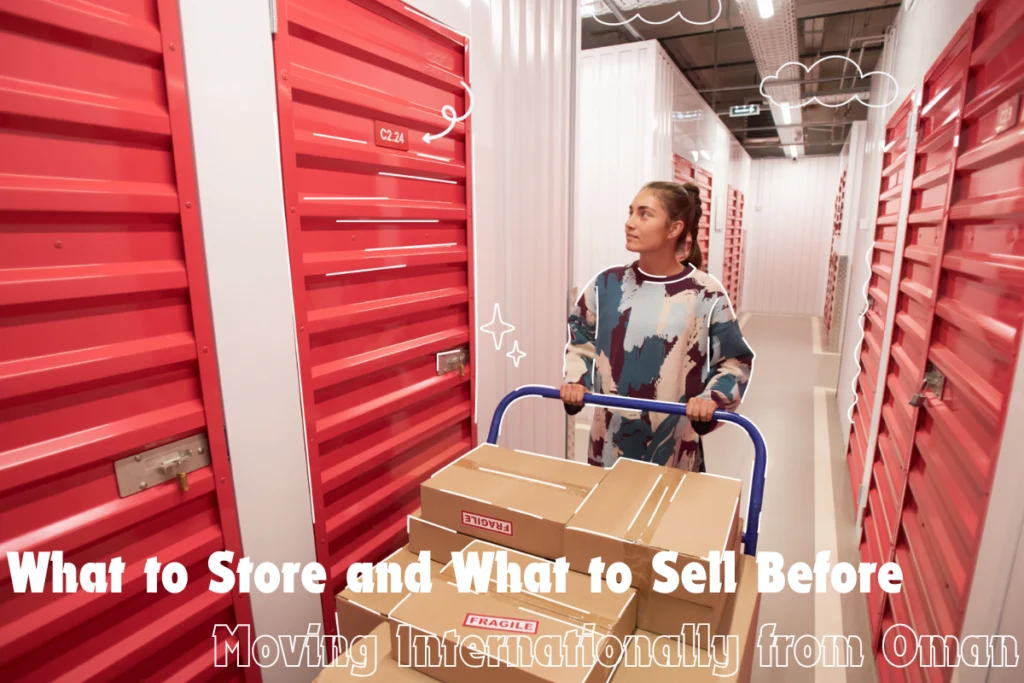
Introduction Nobody warns you about the stuff. The actual, physical stuff that has accumulated over years of living somewhere – the furniture you saved up for, the boxes in the back of the wardrobe that you keep meaning to sort through, the appliances that work perfectly fine but may be completely useless in another country. When you are preparing to leave Oman, that stuff becomes one of the most stressful parts of the whole process, and not enough people talk about it honestly. So here is the reality. Moving internationally means making hundreds of small decisions very quickly, and the ones about what to take, what to sell, and what to tuck away in storage solutions Allied Movers handles – those decisions can genuinely make or break how smoothly your relocation goes. Get them right and you save money, arrive lighter, and start fresh without regret. Get them wrong and you either pay a fortune shipping things you end up never using, or you sell something in a panic that you later desperately wish you had kept. Many families and individuals in Oman have started turning to professional storage solutions Allied Movers provides before their move date arrives, simply because it buys them time and flexibility. Not every decision about your belongings has to be made on moving day. Some things are worth keeping. Some things are not. And having a trusted place to store items while you figure that out – with Allied Movers handling the secure warehouse side of things – takes a surprising amount of pressure off an already chaotic period. This guide is here to help you think through those decisions clearly. What should go into storage, what should be listed for sale, and how warehouse storage for movers Oman before international relocation fits into the bigger picture of your move. Why Planning Ahead Matters When Moving Internationally People often underestimate the cost of shipping until they get the quote. Then it becomes very real, very fast. Moving internationally is expensive in ways that sneak up on you – freight charges, customs clearance, handling fees, last-mile delivery at the other end. The more you are shipping, the more every single one of those line items grows. This is where a lot of people in Oman have found that leaning on storage solutions Allied Movers offers genuinely changes the financial equation. Instead of shipping everything in one go, you take what you need now. The rest goes into secure storage. You are not abandoning those belongings – you are just not paying international freight rates on things you might not even need for another year. Warehouse storage for movers Oman before international relocation is especially worth considering if your situation looks like any of these: Starting these conversations early – before the chaos of moving week hits – means you make decisions from a place of clarity rather than desperation. What You Should Store Before Relocating Some things simply should not be rushed out the door. A few categories of belongings almost always make more sense to store than to sell or ship, and it is worth being deliberate about identifying them before you start packing. 1. Sentimental Items This one sounds obvious but it catches people out more than you would think. In the middle of the stress of packing, sentimental items can start to feel like clutter. They take up space. They are not practical. And so people make decisions they later regret – selling a grandmother’s tea set for a few riyals, donating boxes of childhood photos because there was no time to deal with them properly. The storage solutions Allied Movers provides are climate-controlled and secure specifically because things like old photographs, family heirlooms, handmade items, and personal collections need proper protection over the long term. These are the things that cannot be replaced. They deserve better than a rushed decision on moving day. 2. Expensive Furniture Here is a situation that plays out constantly when people are preparing to relocate abroad. Someone has a dining table they spent real money on – solid wood, custom made, exactly what they wanted at the time. They list it for sale a week before their move. They get two lowball offers and end up selling it for a fraction of what they paid, because they are out of time and have no choice. This does not have to happen. Warehouse storage for movers Oman before international relocation exists precisely for moments like these. You do not have to sell quality furniture under pressure. You can store it properly, wait until your situation abroad is more settled, and then make a proper decision – whether that is shipping it over or selling it on your own timeline for a fair price. 3. Seasonal Items Winter gear, sports equipment, camping supplies – depending on where you are going, these may simply not be relevant for a long time. There is not much point in shipping bulky seasonal items to a country where you will not need them for eighteen months. The storage solutions Allied Movers offers handle this kind of thing well. Store the items, pack what you actually need for now, and have the rest retrieved or forwarded later. 4. Important Documents Property documents, business paperwork, original educational certificates, legal records – these need to be somewhere organised and secure, not stuffed into a random box that gets lost in transit. Allied Movers has specific systems for handling sensitive and irreplaceable materials, which is worth knowing before you start thinking about where to put this category of belongings. 5. Electronics You May Reuse Later Voltage differences and plug standards vary significantly between countries. Some electronics you own will work fine abroad with an adapter. Others simply will not, or will degrade quickly if you try. Rather than making snap decisions about every appliance when moving internationally, it can be smarter to store the ones you are unsure about and work it out once you are
Door-to-Door International Moving: How It Works
Introduction Most people don’t think about how complicated international moving really is. Not until they’re standing in their living room, boxes everywhere, looking at their grandmother’s dining table thinking – okay, how is this actually supposed to get to another country in one piece? I’ve talked to a lot of people who’ve been through it. And honestly, the pattern is pretty predictable. The ones who tried to figure it all out themselves – the shipping, the customs paperwork, the delivery coordination across borders – they came out the other side worn down. Usually spent more than they expected. More than a few said they’d never attempt it that way again. The ones who found a decent door to door relocation service before things spiraled? They still had a hard move. Moving is always hard. But the logistics piece didn’t swallow them whole. That gap is worth understanding. Here’s what it actually looks like. What Is a Door-to-Door Relocation Service? Keep it simple. You’re in your home. Your things need to end up in a home in another country. A door to door relocation service takes that whole journey off your hands. That covers: Packing everything the right way for international transit. Getting it shipped across borders. Clearing customs at both ends. Delivering it all and helping you get unpacked wherever you’re landing. The reason people go this route isn’t complicated. You’re not chasing down multiple contractors. You’re not playing detective when a box goes missing. One team owns the whole international moving service process – your front door on one end, your new home on the other. Step 1: Pre-Move Survey and Planning Before anyone lays a hand on your stuff, Allied Movers needs to get a real picture of what they’re walking into. That starts with a survey. Sometimes in person, sometimes a video walkthrough. They’re looking at how much you’ve got, what’ll need special handling, and what the job is actually going to take – time, resources, cost. People constantly underestimate this step. The whole international moving service process rides on that first assessment being accurate. Miscalculate the volume and you’re looking at costs you didn’t plan for. Miss something fragile and it probably won’t make it. The problems that show up weeks later at customs or during delivery – a lot of them trace back to a rushed survey at the beginning. Watch how Allied Movers handles this early conversation. It tells you more about them than their website ever will. Step 2: Professional Packing and Inventory Something most people figure out a little too late – packing for an international move is a completely different thing from packing for a move across town. Your belongings are going to get loaded and unloaded multiple times. Stacked in containers. Moved through ports by people who have no idea what’s delicate. What actually makes it through that whole journey comes down to how it was packed before it left your house. Allied Movers sends people who do this work every day. They have materials most people can’t just go buy. They build real protection around fragile pieces. They wrap furniture in ways that hold up – not just ways that look thorough. And every item gets logged into an inventory. That list becomes genuinely important later in the international moving service process – when customs wants a breakdown of what’s in the shipment, or when you’re standing in your new place trying to account for everything. Step 3: Air or Sea – Choosing How Your Stuff Travels Everything’s packed. Now it actually has to get there. Two ways that happens: Air Freight Days, not weeks. Also costs a lot more. Makes sense if you’re on a tight timeline or only moving a smaller amount of stuff. Sea Freight Takes a few weeks depending on the route. Costs significantly less. For most people moving a full household, the math isn’t hard. Allied Movers doesn’t just hand you a comparison and leave you to figure it out. They look at your actual situation – when you need to arrive, what your budget looks like, what you’re shipping – and help you think it through. In the international moving service process, this decision has real knock-on effects. If you’ve got a job starting on a fixed date or kids enrolling in school, “a few extra weeks” isn’t just an inconvenience. Step 4: Customs Clearance This is where people who try to manage international moves on their own usually hit a wall. Every country runs differently. What you’re allowed to bring in. What gets taxed. What documents you need. What triggers a review and what happens after. The rules don’t bend for people who didn’t know them. And when something goes sideways – even something small – shipments don’t just get briefly delayed. They get held. Sometimes for weeks. Allied Movers takes all of that on. The paperwork, the communication with customs officials, the heads-up on what duties might come up and why. They’ve done this across different countries, different rule sets, different complications. They know where things tend to go wrong before it becomes your emergency. Honestly, if there’s one part of the international moving service process where trying to go it alone is genuinely a bad idea, it’s here. The knowledge gap is too wide and the consequences of getting it wrong are too serious. Step 5: Delivery at Your New Home Getting through customs feels enormous. It is – but the job’s not done yet. Once clearance is sorted, your shipment moves to your new address. With Allied Movers, that doesn’t mean a driver dropping boxes at the gate and leaving. It means everything comes inside. Big pieces go where you want them. The space is actually usable before anyone walks out. By the time your stuff arrives you’ve already traveled internationally. You’re running on empty in ways that are hard to explain until you’ve done it. Walking into a home where your things are already in roughly the