
Climate-Controlled vs Standard Storage Units in Oman: What’s the Difference?
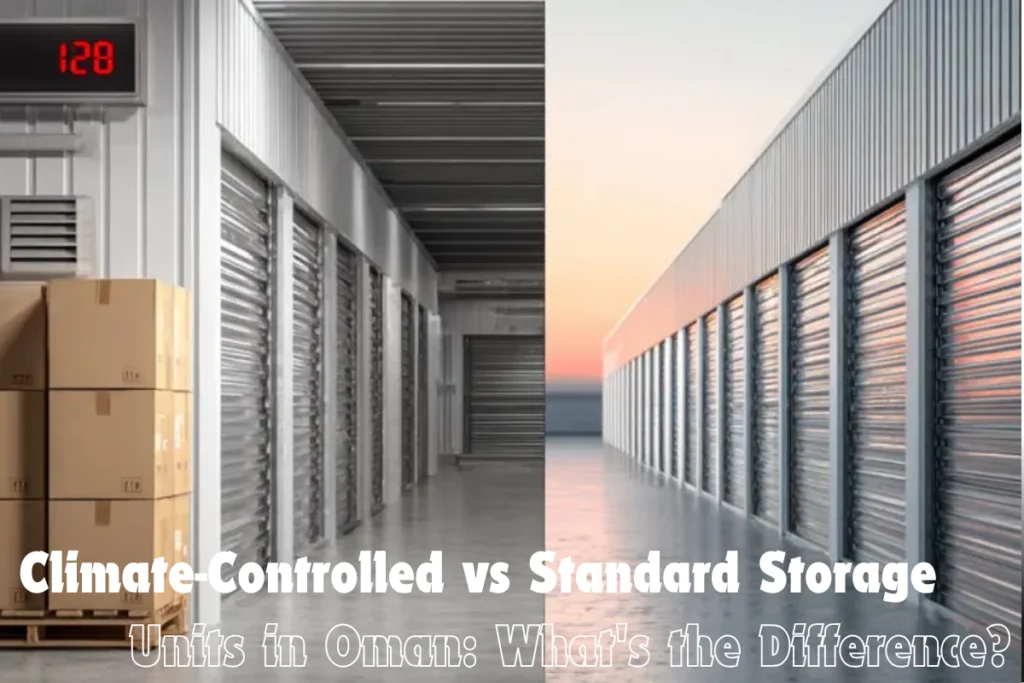
Introduction Storage in Oman is not the same as storage in, say, the UK or Canada. The climate here is a different beast entirely, and the type of unit you choose genuinely changes what comes out the other side. Whether you are moving house, renovating, scaling down, or need somewhere for business stock, that choice between standard and climate-controlled storage is worth thinking through properly before you sign anything. People looking into storage units Muscat Allied movers often wonder if climate control is just a marketing add-on to charge more. Sometimes that scepticism is fair. But in Oman’s conditions, more often than not, it is not. What you are storing and how long you need it there are really the two questions that settle it. The team at warehouse storage Oman Allied movers can usually help you work that out quickly once they know what you are dealing with. Let us go through both options properly. Understanding Standard Storage Units Standard units are the no-frills option, and there is nothing wrong with that for the right situation. Your belongings go in, they are protected from rain, dust, and uninvited company, but whatever temperature and humidity exists outside will, to a large extent, exist inside too. There is no active management happening. For a lot of people browsing storage units Muscat Allied movers, standard storage is the starting point because it costs less and works fine for items that are not particularly delicate. Short-term storage of things that are sturdy and replaceable – that is where standard units genuinely earn their place. What Works in Standard Storage? Customers using warehouse storage Oman Allied movers for overflow household items or general seasonal gear usually find standard units do the job without any drama. The catch, and it is a real one in Oman, is that the summers here are not gentle. The heat builds over months, not days, and it works on your belongings slowly. Wood dries. Fabrics weaken. Anything with an adhesive or coating starts to give. By the time you see the damage, the season has already done its work. What Are Climate-Controlled Storage Units? Climate controlled storage units Muscat Oman Allied movers do something standard units do not – they actively maintain a stable internal environment all year. Temperature stays within a safe range. Humidity is managed. The air inside the unit does not simply mirror whatever Oman’s summer is doing outside. That distinction matters more here than in most places. Providers offering storage units Muscat Allied movers with genuine climate control are not just offering a comfort upgrade – they are offering a different category of protection altogether for belongings that actually need it. Why Climate Control Actually Matters Here Heat Does More Damage Than People Expect Wood splits and warps. Electronics overheat and the internal components degrade. Photographs fuse together or fade in ways that cannot be reversed. Artwork buckles. These are not edge cases – they are predictable outcomes of storing sensitive items through an Omani summer without temperature control. Storage units Muscat Allied movers with proper climate management keep the internal temperature at a level where none of that happens. That is the straightforward version of it. Humidity Is Equally Destructive Moisture is sneaky. It does not announce itself – it just works quietly until you open a box and find mold on your grandmother’s letters or rust forming on something that should have been fine. Climate-controlled units manage humidity levels actively, which makes an enormous difference for leather, timber, fabric, paper, and anything else that reacts to dampness. Businesses relying on warehouse storage Oman Allied movers for stock, machinery, or confidential records are particularly exposed to humidity risk in standard units. Air Circulation Helps More Than People Realise Climate-controlled facilities run proper ventilation throughout. Dust accumulates more slowly, and the air moving through the unit keeps conditions stable over months. In a sealed, unventilated standard unit, the air just sits there – and everything inside it sits with it. Long Stays Need More Protection A few weeks in standard storage is usually fine. Several months, or longer, is a different matter entirely. Customers using storage units Muscat Allied movers for anything beyond a short-term gap consistently find that climate control was worth what it cost – especially when they get their belongings back in the same condition they left them. What Should Actually Go Into Climate-Controlled Storage? Climate controlled storage units Muscat Oman Allied movers are the right call for: The general rule – if it would be expensive or heartbreaking to replace, it belongs in climate control. Talking About Cost Honestly Standard storage units Muscat Allied movers cost less, full stop. They have fewer systems running, lower overheads, and that saving gets passed on. For genuinely durable items over a short period, that is a reasonable trade. Warehouse storage Oman Allied movers with climate control costs more because maintaining controlled temperature and humidity year-round is not cheap to run. But that cost looks very different once you compare it against what it would actually cost to replace heat-warped furniture, water-damaged documents, or electronics that stopped working over the summer. Most people who have done that comparison the hard way say they wish they had just paid for climate control upfront. So Which One Do You Actually Need? Standard Storage Makes Sense When: Many people use warehouse storage Oman Allied movers for garden furniture, sports equipment, or spare white goods without any issue. Standard units handle all of that comfortably. Climate-Controlled Storage Makes Sense When: A good provider will not just push you toward the more expensive option. They will listen to what you are storing and give you a straight answer. The Climate Reality in Oman This is worth saying plainly. Oman is not a forgiving environment for storage. Summers are long, temperatures are extreme, and humidity in coastal areas adds another layer of risk. Standard storage in these conditions is genuinely different from standard storage in a mild climate – the