Introduction
Honestly? Customs was the thing that nearly broke me during my international move. Not the packing, not finding a place to live, not even saying goodbye to people I’d known for years. It was the paperwork. The holds. The phone calls to officials who spoke a different language in every sense of the word.
Everyone warned me about culture shock. Nobody mentioned customs shock.
So if you’re sitting in Oman right now, boxes half-packed, wondering what you’re actually getting yourself into with this move – this is what I wish somebody had told me before I started.
What Is Customs Clearance and Why Does It Matter?
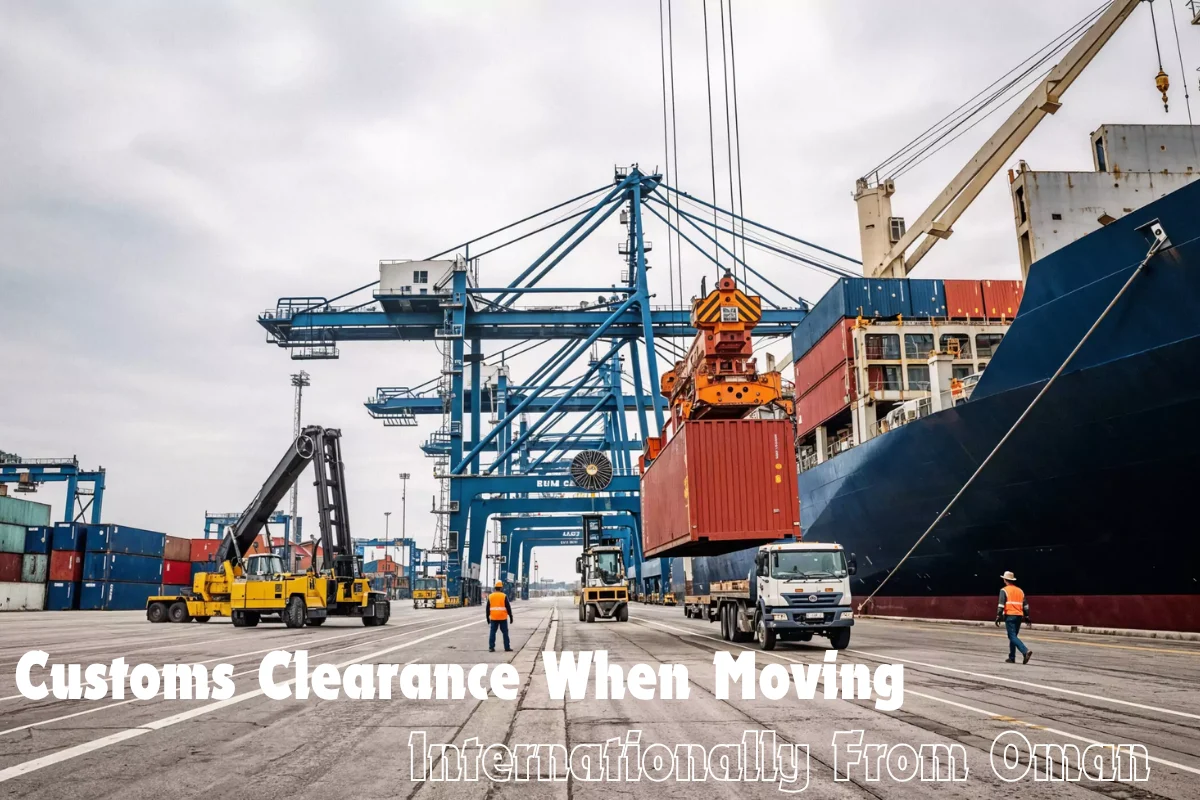
Your stuff doesn’t just get picked up from your house in Oman and dropped off at your new front door somewhere else in the world. That’s not how it works. It travels, yes – but it also stops. At ports, at borders, at inspection facilities where officials go through it, verify it, question it, and decide whether it can continue on its way.
That stopping and checking process is what people mean when they say customs clearance moving abroad.
What are they actually checking for? A few things:
- Everything you’re bringing into their country
- What it’s all worth
- Whether any of it is restricted or banned where you’re headed
- Whether you owe import taxes or duties on any of it
When something goes wrong in international relocation customs – a missing form, an item that raises questions, a description that doesn’t match what’s actually in the box – your shipment doesn’t get waved through. It stops. It waits. And you pay for every day it waits, usually in storage fees, while you’re in a new country with no furniture and a lot of regret.
Documents You’ll Need for Smooth Clearance
I’ve spoken to so many people who got stuck in customs, and the story is almost always the same: the documents weren’t right. Not necessarily fake or fraudulent – just incomplete, or vague, or contradicting each other in some small way that suddenly became a very big problem.
For customs clearance moving abroad, these are the documents you’ll typically need:
- Passport copy
- Visa or residence permit for your destination
- A detailed, itemized packing list – and I mean genuinely detailed
- Bill of lading or airway bill
- Certificate of origin if your destination requires it
- Something concrete proving your residence is actually changing
Let me dwell on that packing list for a second, because people consistently underestimate it. Writing “household items” on a customs form is essentially writing nothing. What officials actually need is: “wooden dining table, used, bought 2019” or “plastic children’s toys, no batteries included.” Every item. Real descriptions.
In international relocation customs, that specificity is what separates shipments that sail through from shipments that get pulled for further inspection.
Restricted and Prohibited Items
This one catches people who’ve done everything else right. You’ve been careful, you’ve been organized, you’ve got your documents in order – and then one item in one box creates a problem at the border because you didn’t know it was an issue.
Common culprits:
- Alcohol – banned or severely restricted in certain destinations
- Anything remotely weapon-adjacent, including items that seem obviously harmless
- Certain types of electronics
- Plants, seeds, or any soil that could carry agricultural disease
- Perishable food
- Prescription drugs without proper medical documentation to support them
For customs clearance moving abroad, the fix here is simple and it costs you almost nothing: look up your destination country’s import restrictions before you start packing. Give it an hour of your time. Actually read through what’s prohibited, what’s restricted, and what requires special documentation.
In international relocation customs, finding out something is banned after it’s already on a cargo ship is an expensive lesson. Find out before it ever leaves your house.
Duties and Taxes: Will You Have to Pay?
Short answer: maybe. The longer answer depends on where you’re going and several other factors that are worth understanding before you arrive.
What typically determines whether duties apply:
- The specific import regulations of your destination country
- Whether your belongings look used or new
- Your residency status at the time your shipment lands
- How long you’ve owned the items you’re shipping
Permanent relocations with used household goods often qualify for duty exemptions – but those exemptions aren’t automatic. They come with conditions. Proof of residency. Proof that the move is permanent. Sometimes a minimum period of time you must have lived outside the country before the exemption kicks in.
For customs clearance moving abroad, build a small financial buffer into your moving budget. Not a huge one, just something. Because getting an unexpected duties bill when you’re already stretched from a cross-border move is a specific kind of miserable that’s completely avoidable with a bit of planning.
In international relocation customs, the financial surprises are real and they happen to prepared people too. Just expect that possibility and take away its power to derail you.
Timing Matters More Than You Think
Nobody thinks about timing until it’s too late and their shipment is sitting somewhere waiting while they’re sleeping on the floor of an empty apartment.
Customs clearance isn’t quick. Depending on your destination, the port, how busy things are, and whether your shipment gets flagged for physical inspection, you could be waiting anywhere from a few days to several weeks. Actual weeks.
What affects how long it takes:
- Whether your documentation was complete and accurate from the start
- How congested the port of entry is when your shipment arrives
- Random inspections – these happen regardless of how well-prepared you are
- Public holidays at your destination, which can pause the entire process
For customs clearance moving abroad, the advice from people who’ve done this before is consistent: get to your destination before your shipment does. If your boxes arrive while you’re still in Oman finishing things up, they sit in paid storage. Every day costs money.
In international relocation customs, timing isn’t a minor logistical detail. It’s a real financial variable that affects your budget directly.
The Role of Professional Movers
I’ll be direct here. International moves are complicated. Customs is one of the most complicated parts of an international move. Trying to manage it entirely on your own while simultaneously handling everything else involved in leaving one country and starting over in another is genuinely where things go wrong.
A good international moving company like Allied Movers handles:
- Your documentation – preparing it, checking it, fixing problems before they become delays
- Clear guidance on what can and cannot travel to your specific destination
- Direct communication with customs officials on your behalf
- Inspections, without you needing to be involved in every stressful moment
For customs clearance moving abroad, working with professionals like Allied Movers isn’t about comfort – it’s about not making expensive mistakes at the worst possible time.
In international relocation customs, the value of having someone experienced in your corner shows up most clearly when something unexpected happens. And something unexpected almost always happens.
Packing Tips That Help With Customs
The physical way you pack your shipment affects how it moves through inspection. A well-labeled, organized shipment with a clear inventory that matches the paperwork gets processed faster than something that looks chaotic and vaguely described.
What actually helps:
- Every box gets a real label with real contents listed – not “misc” or “stuff”
- Similar items packed together, not randomly mixed throughout boxes
- Anything potentially questionable kept separate and easily accessible
- Contents of every box matching exactly what appears on your inventory paperwork
During customs clearance moving abroad, a discrepancy between what’s described and what’s actually in a box – even an accidental one – can get your entire shipment flagged for a deep inspection. That eats time. Time you’d rather spend settling into your new life.
In international relocation customs, good packing is one of those small decisions that carries disproportionate weight. Don’t overlook it.
Common Mistakes to Avoid
These come up constantly:
- Inventory descriptions so vague they communicate nothing useful
- Packing a restricted item without realizing it’s restricted at your destination
- Paperwork that contradicts itself across documents
- Underestimating clearance time and not leaving buffer room in your plans
- Not researching destination import rules until after everything is already sealed in boxes
Getting these things right makes customs clearance moving abroad dramatically more manageable. These aren’t hypothetical edge cases – they’re exactly what stalls well-planned moves.
In international relocation customs, the people who get through without drama almost always started their research and preparation earlier than everyone else.
Tips for a Stress-Free Experience
A few things that genuinely make a difference:
- Start customs research weeks before your move – not days
- Look up your specific destination’s import rules and actually read them
- Keep all documents organized together with copies of everything
- Use Allied Movers for real, verifiable international customs experience
- Be completely honest about what you’re shipping – every single item, no exceptions
Final Thoughts
Moving from Oman internationally is a big undertaking. Customs clearance is a significant part of that undertaking, and it deserves real attention rather than last-minute scrambling.
But it’s manageable. People do it constantly. With the right documentation, an honest understanding of what customs clearance moving abroad actually involves, and some patience for a process that moves at its own pace, you’ll get through it.
International relocation customs is the checkpoint between where your life is right now and where it’s going next. It’s not designed to stop you – it’s designed to verify you. Follow the process properly and it works.
Do the research early. Pack with complete honesty. Get experienced help from Allied Movers if you’re unsure about anything. And when you’re finally unpacking in a place that belongs to you – the customs forms, the inventory lists, all of it – will feel like it happened to someone else entirely.
Frequently Asked Questions
1. What is customs clearance moving abroad?
It’s the process where authorities check and approve your shipment before it enters another country.
2. Do I need documents for international relocation customs?
Yes, documents like your passport, visa, and packing list are essential for smooth clearance.
3. Are used household items taxed during customs clearance moving abroad?
Often they are duty-free, but it depends on the destination country’s rules.
4. Can restricted items delay international relocation customs?
Yes, prohibited or restricted items can cause delays, fines, or even confiscation.
5. Should I hire professionals for customs clearance moving abroad?
Yes, Allied Movers can simplify the process and help avoid costly mistakes.